






Why the Gym Lost Its Monopoly
Let’s be honest: the classic “big box” gym can be a uniquely intimidating place. It’s often loud, crowded, and built around a culture of performance that can feel alienating if you’re just trying to move your body and feel a little better. This feeling,
sometimes called “gym-timidation,” is real. A 2019 survey found nearly half of Americans felt intimidated by the weights section, and one in three felt anxious even thinking about going to the gym. For decades, the fitness industry largely ignored this massive group of potential customers. But a perfect storm of technological innovation, a pandemic that forced everyone home, and a growing cultural demand for inclusivity has finally broken the gym’s monopoly on fitness. The market has realized that wellness isn’t one-size-fits-all, and the result is a Cambrian explosion of alternatives designed for the rest of us.
Your Living Room Is the New Studio
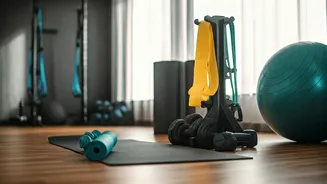
The most significant shift has been the boom in high-quality, on-demand home fitness. This is not your parents’ Jane Fonda workout tape. Platforms like Apple Fitness+, Peloton, and countless others offer slickly produced classes with world-class instructors for everything from HIIT and strength training to yoga and meditation. The key is privacy and convenience. You can try a new workout without an audience, pause to catch your breath, and wear whatever you want. Don’t want to pay for a subscription? Free resources on YouTube, like “Yoga with Adriene” or “FitnessBlender,” have built enormous communities by offering accessible, judgment-free instruction. The at-home model removes the two biggest hurdles for many: the commute and the crowd. It allows you to build a fitness habit on your own terms, in your own space.
Boutique Fitness: Community Without the Chaos
If you crave the energy of a group setting but hate the anonymity of a giant gym floor, boutique studios might be your answer. These specialized gyms focus on one or two things and do them well, whether it’s spinning (SoulCycle), high-intensity interval training (Orangetheory Fitness, F45), or boxing. The experience is fundamentally different. Classes are smaller, the instructors are more hands-on, and there's a built-in structure—you just show up and follow along. This removes the mental load of figuring out what to do. More importantly, these studios cultivate a strong sense of community. You see the same faces every week, creating a supportive environment that feels less like a competition and more like a team sport. It’s the accountability and camaraderie of a group, without the overwhelming scale of a traditional gym.
Fitness Disguised as Fun
Perhaps the most liberating development is the growing recognition that exercise doesn’t have to feel like a chore. The best workout is the one you’ll actually do, and for many, that means finding an activity that’s so enjoyable you forget you’re exercising. This could be anything from a local hiking club or an adult rock-climbing class to a dance-cardio session that feels more like a night out. Even technology is getting in on the fun with virtual reality fitness games like Supernatural, which turn a cardio session into an immersive, rhythm-based experience. The goal is to reframe movement as a source of joy rather than an obligation. Think about what you loved doing as a kid—riding a bike, playing a sport, dancing around your room—and find the adult version. When fitness is fun, consistency takes care of itself.