






First Off, What Is This Festival?
The Rath Yatra, or Chariot Festival, is one of the world's oldest and largest religious processions. Held every summer in the coastal city of Puri in Odisha, India, it celebrates the journey of the Hindu deity Lord Jagannath, along with his elder brother
Balabhadra and sister Subhadra. For this one occasion, the deities leave the inner sanctum of their 12th-century temple and travel aboard massive, brightly decorated chariots to a nearby temple, said to be their aunt's home. The festival draws millions of pilgrims who believe that witnessing the deities on their chariots is an incredibly auspicious event. It’s a nine-day affair, but the main procession—the pulling of the chariots—is the centerpiece that captures the nation's imagination.
The Chariots Are Basically Rolling Temples
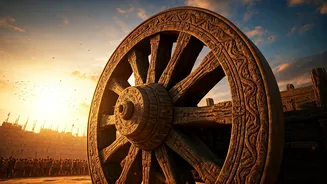
To understand the reverence, you have to picture the chariots. These aren't simple carts. Each one is a colossal, multi-tiered structure built fresh every year from specific types of wood. Lord Jagannath’s chariot, Nandighosha, stands about 45 feet tall and has 16 wheels, each seven feet in diameter. His brother’s and sister’s are only slightly smaller. They are draped in vibrant red, yellow, black, and green fabrics, adorned with intricate carvings, and topped with flags. These are essentially mobile temples, and moving them requires immense, coordinated human effort. The sheer scale and artistry of the chariots signal their sacred importance before a single person touches the ropes.
So, Who Are the 'Pullers'?
Here’s the key: the “chariot pullers” aren't a special class of people or a paid job. The term refers to the hundreds of thousands of ordinary devotees who throng the streets for the chance to grasp one of the thick, coir ropes and help pull the chariots. While there are designated temple servitors, or *sevayats*, who guide the process and perform specific rituals, the primary force comes from the massive, anonymous crowd. Getting to pull the rope is considered a profound act of devotion, or *seva* (selfless service). It’s a physical manifestation of their faith, a way to connect directly with the divine. People travel for days, braving immense crowds and summer heat, just for a few moments of this sacred labor.
It's an Act of Divine Service
In Hindu philosophy, the physical act of pulling the chariot is believed to be a path to spiritual merit, or *punya*. The belief is that by participating in the Lord's journey, a devotee can have their sins washed away and progress toward salvation (*moksha*). Lord Jagannath is known as the “Lord of the Universe,” and during Rath Yatra, he comes out to see and be seen by everyone, regardless of their background. Pulling the rope is not just a favor to the temple; it's seen as a direct service to the deity himself. This transforms a feat of raw physical strength into an act of profound spiritual intimacy, shared among millions at once.
A Powerful Symbol of Unity
Historically, access to Hindu temples was often restricted based on caste. The Rath Yatra is famously egalitarian. When Lord Jagannath is on the street, he is accessible to all. The ropes are pulled by people from every walk of life, standing shoulder-to-shoulder. This act of pulling together becomes a powerful symbol of unity and social equality, breaking down traditional barriers. In a country as diverse and complex as India, an event where millions of people join in a single, common purpose—irrespective of their social or economic standing—is deeply resonant. This is why the pullers, as a collective body of devotees, are revered. They represent the moment when faith flattens hierarchy and unites a nation in a single, devotional act.