







The Anatomy of the Perfect 'Gram
The shot is instantly recognizable. A lavish breakfast spread—overflowing with fruit, local cheeses, and fresh bread—sits on a Turkish rug. In the background, a pastel-hued sky is dotted with dozens, sometimes hundreds, of hot air balloons rising with the sun.
The setting is a stone terrace carved into a whimsical rock formation. This is the scene that has made Cappadocia, a semi-arid region in central Turkey, an undisputed star on social media. For couples, it has become the visual shorthand for romantic, adventurous travel. The hashtag #cappadocia has millions of posts, each showcasing this otherworldly landscape that feels pulled from a fantasy novel. But while the photos are stunning, they only tell part of the story. The magic of these hotels isn't just their photogenic quality; it's that they are built into the very fabric of history and geology.
Living Inside a 'Fairy Chimney'
So, what are these strange, conical structures? Locals have long called them 'fairy chimneys,' but their origin is pure science. Millions of years ago, volcanic eruptions blanketed this region in thick layers of ash. Over eons, that ash compacted into a soft rock called 'tuff.' Wind and water went to work, eroding the soft tuff but leaving behind harder basalt caps on top. The result is a surreal landscape of cone-shaped pillars, mushroom-like formations, and rippling canyons that stretch for miles. The rock was soft enough for humans to carve but sturdy enough to be structurally sound. This unique geological gift is the entire reason Cappadocia's cave dwellings exist. When you stay in a cave hotel, you aren't in a man-made structure designed to look like a cave; you are sleeping inside a geological wonder that was millions of years in the making.
From Ancient Hideout to Boutique Hotel
People have been living in these caves for thousands of years. As far back as the 4th century, early Christians fled Roman persecution and found refuge here, carving out homes, chapels, and entire underground cities that could shelter thousands. Look closely, and you’ll find ancient churches with remarkably preserved frescoes painted directly onto the stone walls. For centuries, these caves served as homes, stables, and monasteries along the Silk Road. The modern 'cave hotel' is a relatively recent, brilliant reinvention of this tradition. Visionary locals began converting these abandoned or simple cave homes into lodgings for travelers. What started as basic guesthouses has now evolved into a world-class hospitality scene. The best hotels masterfully blend the raw, ancient stone with modern luxury, preserving the integrity of the original structure while adding the comforts travelers expect.
The Modern Cave Hotel Experience
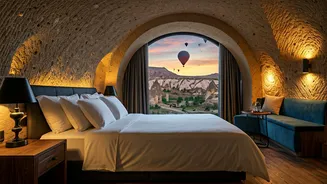
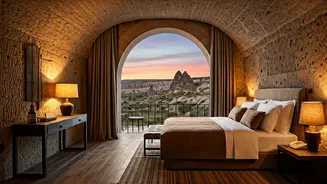
Staying in a cave hotel is a study in contrasts. The walls of your room might be the original, uneven tuff, cool to the touch and whispering of centuries past. But nestled within that ancient space, you might find a luxurious king-sized bed, a rainfall shower, radiant floor heating, and even a private hammam (Turkish bath) or plunge pool carved directly into the stone. The architecture is organic, with rooms and hallways following the natural contours of the rock. No two rooms are exactly alike. The experience extends beyond the room itself. Many hotels feature the multi-level terraces that have become famous on Instagram, offering panoramic views perfect for watching the iconic sunrise balloon launch. They serve incredible local Anatolian cuisine and act as a gateway to exploring the region’s historical sites, from the Göreme Open-Air Museum to the sprawling underground city of Derinkuyu.