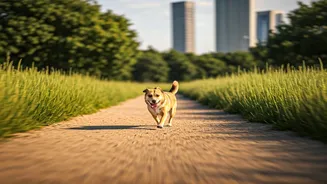







The Pandemic Puppy Effect
The story begins with a simple, powerful trend: a historic boom in pet ownership. During the pandemic, millions of Americans, particularly city-dwelling millennials and Gen Z, adopted pets for companionship. According to the American Pet Products Association,
pet ownership surged, with an estimated 70% of U.S. households now owning a pet. These aren't the backyard dogs of a previous generation. For many younger urbanites, their dog is a core member of the family, a 'fur baby' whose needs are woven directly into their owner’s lifestyle, budget, and daily schedule. As these pandemic puppies have grown up, their owners are realizing that a quick walk around the block or a chaotic half-hour at a dusty dog park is no longer enough. The demand has shifted toward activities that benefit both human and animal, blurring the line between pet care and personal wellness.
From Chore to Core Workout
For decades, walking the dog was seen as a daily responsibility, often a begrudging one. Today, a new mindset is taking hold. Health-conscious urbanites are reframing this routine as a foundational piece of their fitness regimen. A brisk 45-minute walk with a dog can burn a significant number of calories, improve cardiovascular health, and ensure a baseline of daily activity that office jobs often preclude. In a world of expensive gym memberships and boutique fitness classes, the dog becomes a built-in, non-negotiable personal trainer. This 'accountability buddy' doesn't care if you're tired or if it's drizzling; they need to get out. This consistency is something many people struggle to achieve on their own. As a result, pet owners are actively seeking out environments that can turn a simple walk into a genuine workout: routes with varied terrain, longer uninterrupted paths, and safe, scenic surroundings that make the activity enjoyable for everyone involved.
The Limits of the Urban Grid
Most American cities were not designed with this need in mind. The typical urban landscape is a patchwork of concrete, crowded sidewalks, and traffic-heavy intersections—hardly an ideal setting for a relaxing or strenuous workout with a pet. Dog parks, while valuable, are often small, overcrowded, and static. They provide socialization but don't satisfy the need for linear movement and exploration that benefits both a dog’s mind and an owner’s fitness goals. This mismatch between desire and infrastructure is the central tension driving the new 'fitness need.' People don't just want a place for their dog to run; they want a place for *them* to run, walk, or hike *with* their dog. They are looking for greenways, connected park systems, waterfront promenades, and quiet residential streets that form multi-mile loops, allowing for a sustained period of exercise away from the stop-and-start chaos of downtown cores.
How Cities and Developers Are Responding
Where there's a need, the market eventually follows. Forward-thinking city planners and real estate developers are starting to recognize this powerful demand. New residential buildings increasingly market their proximity to trails and parks as a primary amenity, right alongside a pool or a gym. Some even offer dedicated dog-walking services and on-site 'pet spas.' On a municipal level, cities are investing in expanding and connecting greenways—linear parks that can stretch for miles, providing a perfect corridor for pet-friendly fitness. Projects like Atlanta's BeltLine or the High Line in New York (though the latter is not dog-friendly, it set a precedent for repurposed infrastructure) showcase the immense public appetite for walkable, nature-infused urban spaces. The success of these projects sends a clear signal: the cities that thrive in the coming decades will be the ones that treat pet-friendly infrastructure not as a luxury, but as essential public utility for a healthier, happier population.