



The Magic of Liquid Light
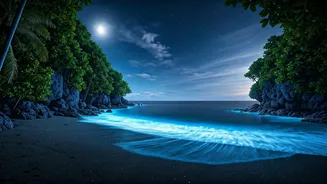
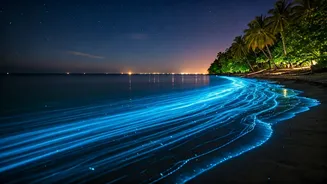
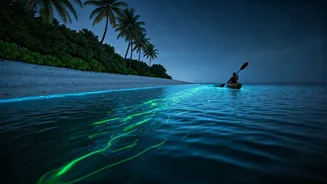
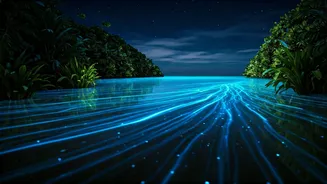
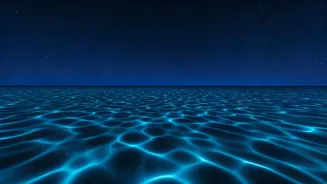
What creates this otherworldly glow? The answer is bioluminescence, a chemical reaction that allows living things to produce their own light. In certain bays around the world, the water is filled with millions of microscopic organisms called dinoflagellates.
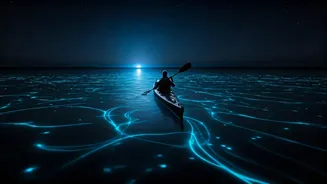
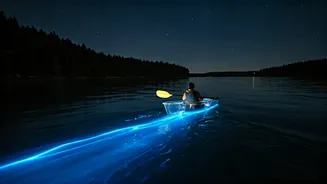
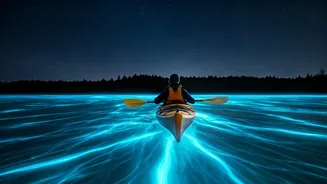
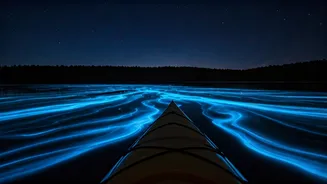
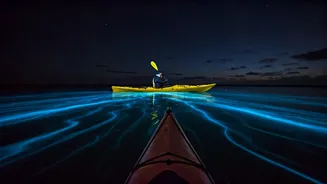
When agitated by a paddle, a kayak, or even a passing fish, these tiny creatures—specifically a species called *Pyrodinium bahamense*, or “spinning fire of the Bahamas”—emit a burst of light as a defense mechanism. The result is a surreal experience where every movement in the water leaves a glittering trail, turning the dark sea into a liquid galaxy. It feels less like biology and more like pure, unfiltered magic, a direct connection to a world that operates on a level of wonder we rarely get to witness firsthand.
The World's Brightest: Mosquito Bay
While a few places on Earth offer this spectacle, none compare to Mosquito Bay on the island of Vieques, Puerto Rico. In 2006, the Guinness Book of World Records officially declared it the brightest bioluminescent bay in the world. Its unique geography is the key. A narrow, shallow channel to the Caribbean Sea allows the dinoflagellates to enter but makes it difficult for them to leave. Protected from harsh weather and pollution, and nourished by surrounding mangroves, their population has reached a staggering density—up to 700,000 organisms per gallon of water. This concentration means the glow isn't a faint shimmer; it’s a brilliant, powerful light that transforms the entire bay into an ethereal wonderland after sunset.
How to Plan the Perfect Visit
Timing is everything. The most crucial factor for a spectacular experience is the phase of the moon. For the brightest and most dramatic views, you must plan your trip around the new moon, when the sky is at its darkest. A full moon, or even a half moon, can wash out the delicate glow of the dinoflagellates. Most tour operators in Vieques won't even run trips during the days surrounding a full moon, so check a lunar calendar before you book your flights. The best time of year is generally during the dry season (from December to early spring) to avoid rain, but the bay is active year-round. To get to Vieques, you can take a short flight from San Juan or a ferry from Ceiba, a port on Puerto Rico's eastern coast.
The Unforgettable Kayak Tour
The only way to experience Mosquito Bay is on a guided tour, typically in an electric pontoon boat or, for a more intimate experience, a kayak. As you paddle away from the shore, the water begins to shimmer. At first, it's subtle—a sparkle around your paddle, a flash from a darting fish. Then, as your eyes adjust to the darkness, the full effect takes hold. Every stroke creates a brilliant vortex of light. Schools of fish become underwater comets, leaving fiery trails in their wake. If it rains, each drop hitting the surface creates a tiny, glowing explosion. It is important to note that to protect this fragile ecosystem, swimming in Mosquito Bay is no longer permitted. While the temptation to jump in is strong, this rule ensures the bay remains pristine for generations to come. The experience of gliding silently across the water, surrounded by constellations both above and below, is more than enough to leave you completely breathless.
Making the Trip Fully Worth It
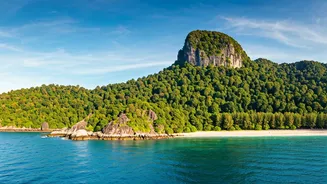
While the bioluminescent bay is the main event, Vieques itself makes the journey worthwhile. The island, a former U.S. Navy training ground, is now a nature-lover's paradise, with much of its land designated as a National Wildlife Refuge. You can spend your days exploring dozens of secluded, pristine beaches like Playa La Chiva and Playa Caracas, or watching the island’s famous wild horses roam free. The laid-back towns of Isabel Segunda and Esperanza offer local charm, fresh seafood, and a welcome escape from the hustle of the mainland. The combination of daytime adventure and nighttime magic makes a trip to Vieques a complete and unforgettable experience.