
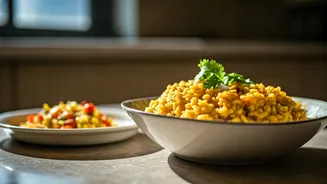
The Complete Protein Powerhouse
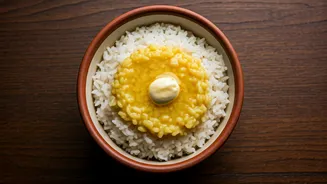
At the heart of countless Indian meals lies a principle of nutritional synergy that modern dietitians celebrate: the combination of grains and legumes. Think of the quintessential comfort food, dal and chawal (lentils and rice). This isn't just a happy
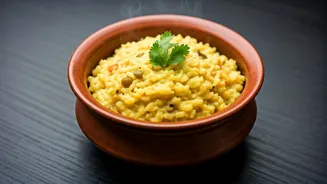
accident of flavor; it's a scientific masterstroke. Most legumes are rich in the amino acid lysine but low in methionine. Grains, like rice or wheat, are the opposite. Eaten together, they form a 'complete protein,' providing all the essential amino acids our bodies need, akin to what you’d find in meat or dairy. This foundational pairing, replicated in dishes like khichdi (a savory porridge of rice and lentils) or roti served with a chickpea curry (chana masala), has allowed a largely vegetarian population to thrive for millennia. It's a quiet, delicious rebuttal to the idea that a meal isn't complete without a large portion of animal protein.
An Alchemy of Flavor
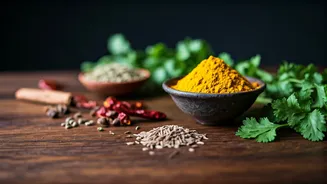
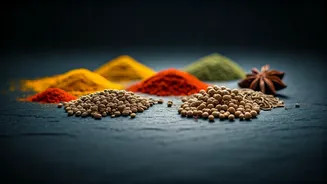
For many Americans, a can of beans represents a culinary challenge: how do you make it taste like… something? Indian cooking answers this question with a dazzling array of techniques designed to build layers of complex flavor. The most important of these is the tadka, or tempering. Spices like cumin seeds, mustard seeds, and asafoetida are bloomed in hot ghee or oil, a process that instantly unlocks their aromatic compounds. This fragrant, sizzling mixture is then poured over a finished dal or vegetable dish, instantly transforming it from simple to sublime. Beyond the tadka, there's the masterful use of aromatics like ginger, garlic, and onion as a base; the sour notes from tamarind, yogurt, or tomatoes to cut through richness; and the finishing touch of fresh herbs like cilantro. This is how a humble lentil is elevated into a deeply savory, aromatic, and utterly satisfying centerpiece.
A Universe of Texture and Variety
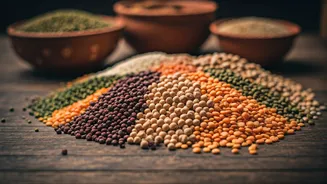
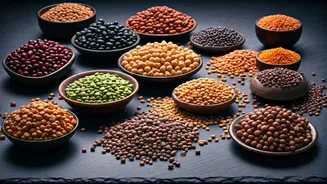
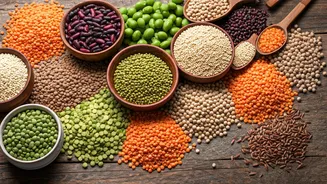
To say Indian cuisine uses 'legumes' is like saying American music uses 'guitars.' The statement is true, but it misses the entire universe of diversity. There are dozens of dals (lentils, beans, and peas), each with a distinct texture and cooking time. Toor dal cooks down into a creamy, soupy consistency perfect for pouring over rice. Mung dal can be cooked until soft or kept whole for a firmer bite. Hearty kidney beans (rajma) and chickpeas (chana) are simmered for hours into thick, robust curries. But it doesn't stop there. The same ingredients are transformed into entirely new forms. Fermented rice and lentil batter is steamed into fluffy idlis or griddled into crispy dosas. Chickpea flour (besan) is used to batter vegetables for pakoras or to create savory pancakes and rich, fudge-like desserts. This variety ensures that a plant-centric diet is never monotonous.
Smart, Sustainable, and Satisfying
The wisdom of the Indian kitchen offers a compelling model for the modern American table, one that aligns perfectly with today’s desires for health, sustainability, and fiscal prudence. A diet centered on grains and legumes is inherently more affordable than one reliant on meat. It's also significantly better for the planet, as these crops require far fewer resources to produce. But perhaps most importantly, this way of eating is not about deprivation. It’s about abundance—an abundance of flavor, texture, and nourishing traditions. It reframes frugality not as a sacrifice, but as a sophisticated culinary strategy. By understanding the principles of pairing for nutrition, building flavor, and embracing variety, we can see that Indian kitchens don't just know that grains and legumes work; they know how to make them sing.