


More Than a Murphy Bed
When you hear “flexible room,” you might picture a dusty Murphy bed or a rickety folding screen. Today’s hyper-flexible spaces are something else entirely. They are dynamic environments, often powered by robotics and clever engineering, that allow a single
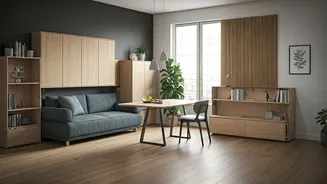
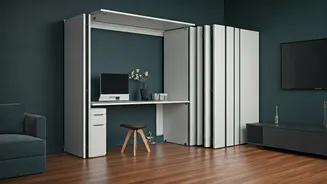
room to serve multiple, distinct functions without compromise. Think less about hiding a bed and more about commanding a room to completely reconfigure itself. At the touch of a button or with a simple voice command, a spacious living room can retract its sofa and lower a bed from the ceiling, while a walk-in closet glides out from a wall. In the morning, that same bedroom can transform into a fully functional home office, complete with a desk and shelving that were concealed just hours before. This isn't about compromise; it's about optimization. The goal is to give residents the full utility of a three-room apartment within the footprint of a studio.
The Squeeze of Modern Urban Life
This trend isn't just a gimmick; it's a direct response to the pressures of modern city living. As housing costs in major U.S. cities continue to climb, square footage has become an expensive luxury. Developers are building smaller and smaller micro-apartments to keep prices accessible, forcing residents to get creative. The pandemic accelerated this shift by cementing the work-from-home model. Suddenly, the open-plan studio that felt chic and minimalist in 2019 became a cluttered, claustrophobic trap in 2020. People needed a clear boundary between work and life, but their floor plan offered none. Hyper-flexible design addresses this by creating programmatic separation. You aren't just working at your dining table; you are working in a dedicated office that disappears at 5 p.m., allowing you to reclaim your home and your headspace.
Robots in the Living Room
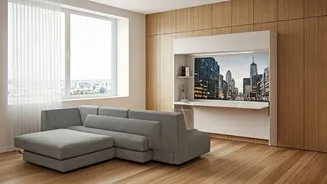
The technology driving this revolution is coming from innovative startups that blend robotics, furniture design, and architecture. Companies like Ori, an MIT Media Lab spin-off, are at the forefront. Their signature product, the “Cloud Bed,” is a queen or king-sized bed that descends from a stylish housing integrated into the ceiling, turning a living room into a master bedroom in 30 seconds. When raised, it reveals a comfortable sofa and coffee table underneath. Other systems feature entire walls of cabinetry and storage that glide across the room to reveal a hidden office or divide a larger space into two smaller, private ones. Bumblebee Spaces offers a similar concept, using the ceiling as a “second floor” for storage. Beds, closets, and storage units are hoisted into the ceiling when not in use, freeing up valuable floor space and creating an environment that feels open and uncluttered, even in a 350-square-foot apartment.
The Psychology of a Tidy Space
The benefits of these systems go far beyond simple space-saving. There's a significant psychological payoff. The constant visual reminder of work—the laptop on the kitchen counter, the files stacked on the nightstand—contributes to burnout and the feeling that you’re never truly “off.” The ability to physically transform your office back into a living room creates a powerful ritual that signals the end of the workday. It helps restore the home as a place of rest and sanctuary. For city dwellers who often feel like they are living on top of their possessions, the ability to conceal clutter and create open, clean lines provides a sense of calm and control. It’s a solution that tackles both physical and mental chaos, making a small home feel not just bigger, but better.