
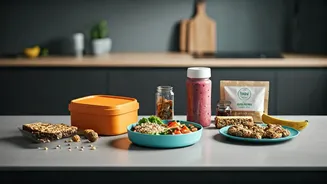

The Backlash Against 'Good' vs 'Bad'
For years, the wellness landscape was a battlefield of restriction. We were told to cut carbs, eliminate sugar, and banish fat. Foods were moralized as either 'good' or 'bad,' 'clean' or 'dirty.' This all-or-nothing approach created a cycle of deprivation,
craving, and eventual guilt-ridden indulgence. But a cultural exhaustion has set in. Consumers are increasingly rejecting the rigid doctrines of diet culture, recognizing that labeling food creates stress and anxiety, which are antithetical to true well-being. This new mindset isn’t about abandoning health; it’s about redefining it. Instead of focusing on what to eliminate, the new food mood is about what to add—more flavor, more joy, and more permission to simply enjoy what you eat.
Enter 'Permissible Indulgence'
This shift has a name in the food industry: 'permissible indulgence.' It’s the happy middle ground between a spartan salad and a deep-fried candy bar. Think of it as the thoughtful upgrade. It's not just any ice cream; it's a pint from a local creamery made with real cream and strawberries, or a 'healthier' version packed with protein that still delivers on taste. It’s the dark chocolate bar with sea salt and almonds, positioned as a source of antioxidants. It’s the gourmet sourdough pizza with high-quality cheese and fresh basil. The key is a focus on quality, transparency, and satisfaction. These foods aren't 'cheats'; they are deliberate, mindful choices. The permission comes from knowing you’re choosing something made with better ingredients, in a more reasonable portion, or that simply provides a moment of genuine pleasure without a nutritional compromise you can't live with.
Wellness Is Now a Mental Game
The evolution of the wellness industry is a huge driver of this trend. While early wellness culture was obsessed with physical metrics—pounds, inches, and calories—the modern definition has expanded to embrace mental and emotional health. Stress reduction, mindful practices, and self-care are now central pillars. In this new framework, a restrictive diet that causes anxiety is no longer seen as healthy, no matter its effect on the scale. An occasional, joyfully eaten dessert is no longer a failure but an act of balance. The pandemic accelerated this shift, as millions sought comfort and stability in uncertain times. Food became a primary source of that comfort, and many realized that the pleasure derived from a favorite meal was a crucial part of their mental well-being. The guilt just didn't seem worth it anymore.
How Brands Are Getting the Message
The food industry has taken notice. Walk down any grocery aisle and you’ll see the language has changed. The shouting labels of 'FAT-FREE!' and 'ZERO-CALORIE!' are being replaced by a more sophisticated vocabulary. Words like 'plant-based,' 'real ingredients,' 'ethically sourced,' 'small batch,' and 'simply' dominate packaging. Brands are no longer just selling a low-calorie product; they’re selling a story and an experience. They’re marketing the feeling of a guilt-free treat, the satisfaction of a wholesome snack, or the luxury of a well-crafted indulgence. This reflects a fundamental understanding of the new consumer mindset: people still want to be healthy, but they’re no longer willing to sacrifice pleasure and mental peace to get there. They want their cake—made with almond flour and real vanilla bean, perhaps—and they want to eat it, too.