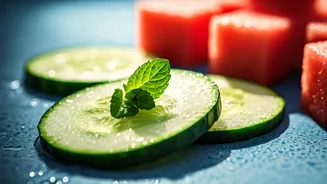







1. Cucumber: The Hydration Hero
It’s no surprise that cucumbers are a summer staple. Composed of about 95% water, they are one of the most hydrating foods you can eat, which is essential for regulating body temperature. When you're hot, you sweat, losing vital fluids. Replenishing them
with water-rich foods like cucumber helps your internal cooling system function efficiently. Beyond hydration, cucumbers contain silica, a trace mineral that supports connective tissues, and their skin is a good source of fiber, which aids in keeping your digestive tract moving smoothly. Their low-calorie profile means your body doesn't have to work hard to digest them, preventing the metabolic heat spike that can come from heavier foods. Slice them into salads, add them to water, or blend them into a refreshing gazpacho.
2. Mint: Nature’s Air Conditioner
That fresh, tingling sensation you get from mint isn’t just in your head. Mint contains menthol, a compound that tricks the brain by activating cold-sensitive receptors in the skin and mouth. While it doesn't actually lower your body temperature, it creates a powerful and immediate sensation of coolness. This makes it a psychological superstar on a sweltering day. From a digestive standpoint, mint has been used for centuries to soothe upset stomachs. It's known to relax stomach muscles and may help improve the flow of bile, which the body uses to digest fats. A cup of peppermint tea after a meal or a few fresh leaves muddled into a glass of iced water can offer dual relief from both heat and indigestion.
3. Watermelon: The Quintessential Summer Refresher
Nothing says summer like a slice of juicy watermelon. Like cucumber, its incredibly high water content (around 92%) makes it a first-rate hydrator. But watermelon also delivers a dose of key electrolytes like potassium, which are crucial for maintaining fluid balance and are often lost through sweat. It’s also a fantastic source of lycopene, a powerful antioxidant that may help protect the skin from sun damage—a welcome bonus during the sunniest months. Because it’s so light and easy to digest, watermelon gives you a quick energy boost from its natural sugars without weighing you down or forcing your digestive system into overdrive.
4. Yogurt: The Probiotic Powerhouse
A cool bowl of yogurt can feel like a balm on a hot day. Its cooling effect is partly textural, but its real magic lies in its digestive benefits. Yogurt is a prime source of probiotics, the beneficial bacteria that support a healthy gut microbiome. A balanced gut is essential for efficient digestion, and during summer heat when we might be eating at irregular times or indulging in cookout fare, probiotics can help keep things stable. The live cultures in yogurt assist in breaking down food and absorbing nutrients. Opt for plain, unsweetened yogurt to avoid the added sugars that can sometimes contribute to inflammation and digestive discomfort. You can enjoy it with fresh berries or use it as a base for a cooling dip like tzatziki.
5. Fennel: The Digestive Soother
Fennel might not be the first ingredient you think of for cooling down, but it has a long history as a digestive aid, particularly in Ayurvedic and traditional European medicine. The crisp, slightly sweet, licorice-flavored bulb can be eaten raw in salads, providing a satisfying crunch and a burst of freshness. Fennel seeds are famously chewed after meals in many cultures to freshen breath and ease digestion. The plant contains compounds that are thought to relax the intestinal tract, relieving gas and bloating. This soothing effect can be particularly welcome when heat makes you feel sluggish and bloated. Shaving raw fennel into a citrusy salad provides a refreshing and sophisticated way to beat the heat while supporting your gut.
6. Leafy Greens: Light and Nutrient-Dense
Swapping a heavy, cooked meal for a large, crisp salad is an intuitive way to feel cooler, and for good reason. Leafy greens like romaine, spinach, and arugula have high water content and are exceptionally easy for the body to process, especially when eaten raw. They don't require much metabolic energy to break down, which helps keep your internal temperature down. Furthermore, they are packed with essential vitamins and minerals without being heavy. Their high fiber content promotes regular digestion, preventing the sluggish feeling that can accompany constipation. Building your summer meals around a base of fresh greens is a simple strategy for staying light, hydrated, and comfortable.