








The End of the Airport SIM Scramble
For years, the savvy traveler’s playbook was clear: avoid your home carrier’s outrageous international roaming fees at all costs. This meant a frantic, post-flight mission. You’d join a queue at a brightly lit airport kiosk, hand over your passport, and fumble
with a tiny piece of plastic and a pin-like tool to swap out your primary SIM card. You’d get a local number you didn't know and a data plan that might—or might not—be a good deal. It worked, but it was a hassle, especially after a long-haul flight. This process left you temporarily disconnected at the most crucial moment. You couldn’t call a rideshare, look up directions to your hotel, or let family know you’d landed safely until the new SIM was active. This familiar friction point of modern travel is precisely what 'eSIMs' were designed to eliminate.
So, What Is an eSIM, Anyway?
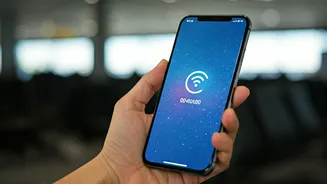
Think of an eSIM as a digital SIM card. There’s no physical chip to install. Instead, the technology is a small, rewritable chip that's already embedded inside your phone by the manufacturer. Most smartphones produced since 2018—including Apple’s iPhone XS and later, Google’s Pixel 3 and later, and many Samsung Galaxy models—are eSIM-compatible. This embedded chip can download and store a 'SIM profile' from a carrier. Instead of inserting a plastic card that tells your phone which network to connect to, you simply scan a QR code or tap a button in an app. Your phone downloads the necessary information and, just like that, it can connect to a new network. The best part? Your phone can hold multiple eSIM profiles at once, and you can keep your primary physical SIM for calls and texts from home.
The Rise of the eSIM Marketplace
This is where the 'viral' part of the headline comes in. While the technology has existed for a few years, its adoption exploded thanks to a new category of apps that function as global marketplaces for data. Companies like Airalo, Holafly, Nomad, and GigSky have built user-friendly platforms that aggregate data plans from hundreds of carriers in nearly every country on earth. Instead of going to a specific carrier, you go to one of these apps. You can browse data packages for your destination—say, '10 GB for 30 days in Italy'—compare prices, and purchase a plan in minutes, often before you even leave home. This accessibility and competitive pricing, shared widely by travelers on platforms like TikTok and Instagram, have turned these apps into essential travel tools. They’re not carriers themselves; they are convenient, one-stop shops for global connectivity.
How It Works: A Simple Guide
Getting started is surprisingly straightforward. Here’s the typical process: 1. **Check Compatibility:** First, confirm your phone supports eSIM technology. A quick search for your phone model and “eSIM” will give you the answer. Most modern phones do. 2. **Download a Marketplace App:** Head to the App Store or Google Play and download one of the popular eSIM marketplace apps. Airalo is a common starting point due to its wide coverage. 3. **Browse and Buy:** Open the app and search for your destination country or region. You'll see a list of available data plans (e.g., 1GB for 7 days, 5GB for 30 days). Choose the one that fits your needs and purchase it directly within the app. 4. **Install Your eSIM:** The app will provide instructions, which usually involve scanning a QR code or following an automated in-app prompt. It’s best to do this while you have a stable Wi-Fi connection at home or in the airport before you depart. 5. **Activate Upon Arrival:** Once you land, go into your phone’s cellular settings, turn on the new eSIM line, and enable data roaming for it. Your phone will connect to the local network within moments, and you'll have data before you even unbuckle your seatbelt.
The Perks and a Few Caveats
The advantages are clear: it's often significantly cheaper than carrier roaming, incredibly convenient, and you can keep your primary U.S. number active for calls and texts. You don't have to worry about losing your tiny home SIM card, and you can top up your data on the fly through the app if you run low. However, there are a few things to keep in mind. Most of these affordable eSIM plans are data-only, meaning you won't get a local phone number for making traditional calls (though services like WhatsApp, FaceTime Audio, and Skype work perfectly over the data connection). Additionally, the setup process, while simple, can be intimidating the first time. It's always a good idea to install your first eSIM a day or two before your trip to ensure everything is working correctly.