


The Science of a Dark Moon
When we talk about a 'new moon,' we’re describing a specific moment in the lunar cycle. It’s when the moon is positioned between the Earth and the sun. From our perspective, the side of the moon facing us is not illuminated by sunlight, making it virtually
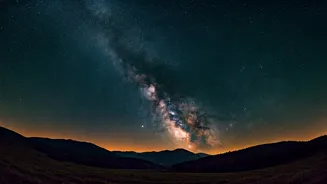
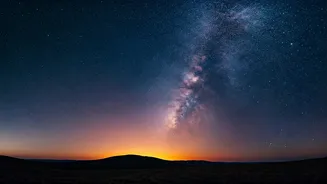
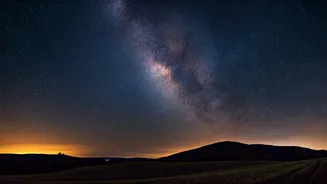
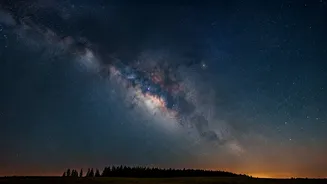
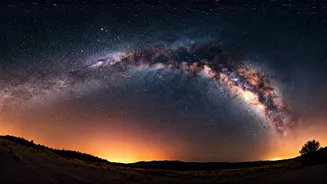
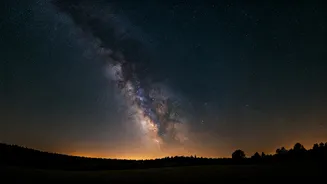
invisible in the night sky. This lack of moonlight is a gift to anyone who loves to look up. Normally, a bright full or gibbous moon acts like a giant source of natural light pollution, washing out fainter stars, distant galaxies, and the subtle glow of the Milky Way. But during the new moon, that celestial floodlight is switched off. The result is a 'pristine' darkness that allows the most delicate and distant light from across the cosmos to finally reach our eyes. It’s the closest many of us will get to the kind of night sky our ancestors saw every single night.
Why the 'Taurus' Timing Matters
While the term 'Taurus New Moon' is popular in astrology, it has a practical meaning for astronomers, too. It simply marks the time of year when the sun is passing through the constellation Taurus. For us in the Northern Hemisphere, this occurs in the spring. This timing dictates which parts of the celestial sphere are visible after sunset. As the sun sets in the west, the spring constellations follow behind it. This particular new moon provides a fantastic window to observe the star patterns that define this season. You’re not looking *at* Taurus, since it's in the same direction as the sun, but you are perfectly positioned to see the constellations that occupy the late-evening sky, from the majestic lion, Leo, to the faint but beautiful stars of Cancer.
Your Guide to a Perfect Stargazing Night
Seizing this opportunity for epic stargazing requires a little planning. First, check the weather forecast; clouds are the number one enemy of any astronomical viewing. Next, and most importantly, escape the city lights. Even a 30-minute drive outside a major metropolitan area can dramatically improve your view. Use online light pollution maps to find a designated dark-sky park or a quiet rural spot. Once you arrive, give your eyes time to adapt. It takes about 20 to 30 minutes for your pupils to fully dilate and for you to develop your 'night vision.' During this time, avoid looking at your phone or any white lights. If you need a light, use a flashlight covered with red cellophane or one with a dedicated red-light mode, as red light is far less disruptive to your night vision.
What to Spot in the Spring Sky
With a dark, moonless sky, you don’t need a telescope to be amazed. Start by looking for familiar shapes. The Big Dipper will be high in the northern sky. Follow the 'arc' of its handle to find the bright orange star Arcturus in the constellation Boötes, and then 'speed on' to the bright blue-white star Spica in Virgo. Look toward the south to find the constellation Leo, the Lion, which looks like a backward question mark (the lion’s head and mane) attached to a triangle (its hindquarters). If you have binoculars, try to find the Beehive Cluster (M44) in the faint constellation Cancer, located between Leo and Gemini. On a dark night, it appears as a faint, misty patch to the naked eye, but binoculars will resolve it into a sparkling collection of young stars.
Embrace the Stillness
Beyond the astronomical checklist, the real magic of a new moon night is the experience itself. It’s an invitation to slow down. Bring a blanket or a comfortable chair, lie back, and just watch. Listen to the sounds of the night. Notice the chill in the air. The point isn’t just to identify celestial objects but to feel a part of the vast, quiet universe that is always there, waiting just beyond the glare of our everyday lives. This opportunity isn’t just about seeing stars; it’s about finding a moment of perspective and wonder, a feeling that’s increasingly hard to come by.