

The End of the Sad Salad Era
For decades, the “healthy option” on most American menus was an afterthought—a culinary penalty box for the virtuous. It was the undressed salad with watery tomatoes, the steamed fish devoid of character, or the quinoa bowl that tasted more like a chore
than a choice. This approach was rooted in a philosophy of subtraction: health was achieved by removing fat, salt, and sugar, and with them, most of the flavor and joy. Dining out was a binary choice between indulgence and asceticism. If you chose the latter, you were often rewarded with a meal that was technically nutritious but emotionally unsatisfying, reinforcing the false idea that delicious food and healthy food were mutually exclusive categories.
A New Culinary Doctrine: Flavor First
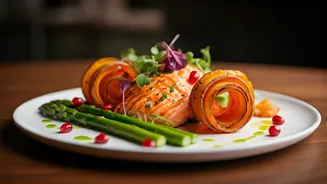
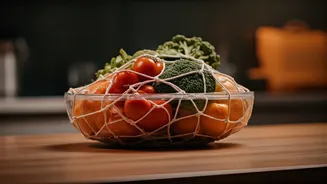
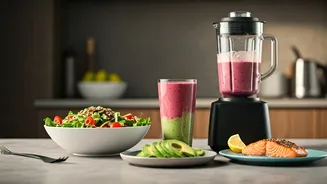
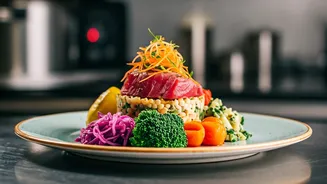
The revolution in wellness dining isn't about a new diet fad; it's about a fundamental shift in culinary philosophy. Today’s forward-thinking chefs are treating vegetables, legumes, and whole grains with the same reverence once reserved for prime cuts of meat. The goal is no longer to create a low-calorie imitation of a 'real' dish. Instead, it’s to unlock the inherent potential of the ingredients themselves. This approach prioritizes addition over subtraction. Instead of asking what to remove, chefs are asking what they can add to build complexity, texture, and crave-worthy flavor. It’s a move away from thinking of food as mere fuel and a return to celebrating it as a source of pleasure, with nutritional benefits as a natural, integrated outcome rather than the sole, joy-killing focus.
Unlocking Taste with Science and Fire
So how are they making broccoli exciting? The secret lies in applying sophisticated culinary techniques to humble ingredients. Chefs are leveraging the science of taste to build powerful flavors without relying on heaps of butter or cream. Fermentation is a key player, with ingredients like miso, kimchi, and kombucha adding funky, umami-rich depth to everything from dressings to marinades. The Maillard reaction—the chemical process that creates browned, savory flavors—is being deployed with gusto on vegetables. Carrots are being slow-roasted until their sugars caramelize, cauliflower is getting charred over open flames to develop a smoky, steak-like character, and mushrooms are being seared to draw out their earthy, meaty notes. A global pantry of spices, herbs, chiles, and acidic elements like citrus and vinegar are used to create layers of bright, bold, and balanced flavor.
From Fine Dining to Your Lunch Break
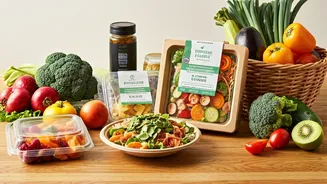
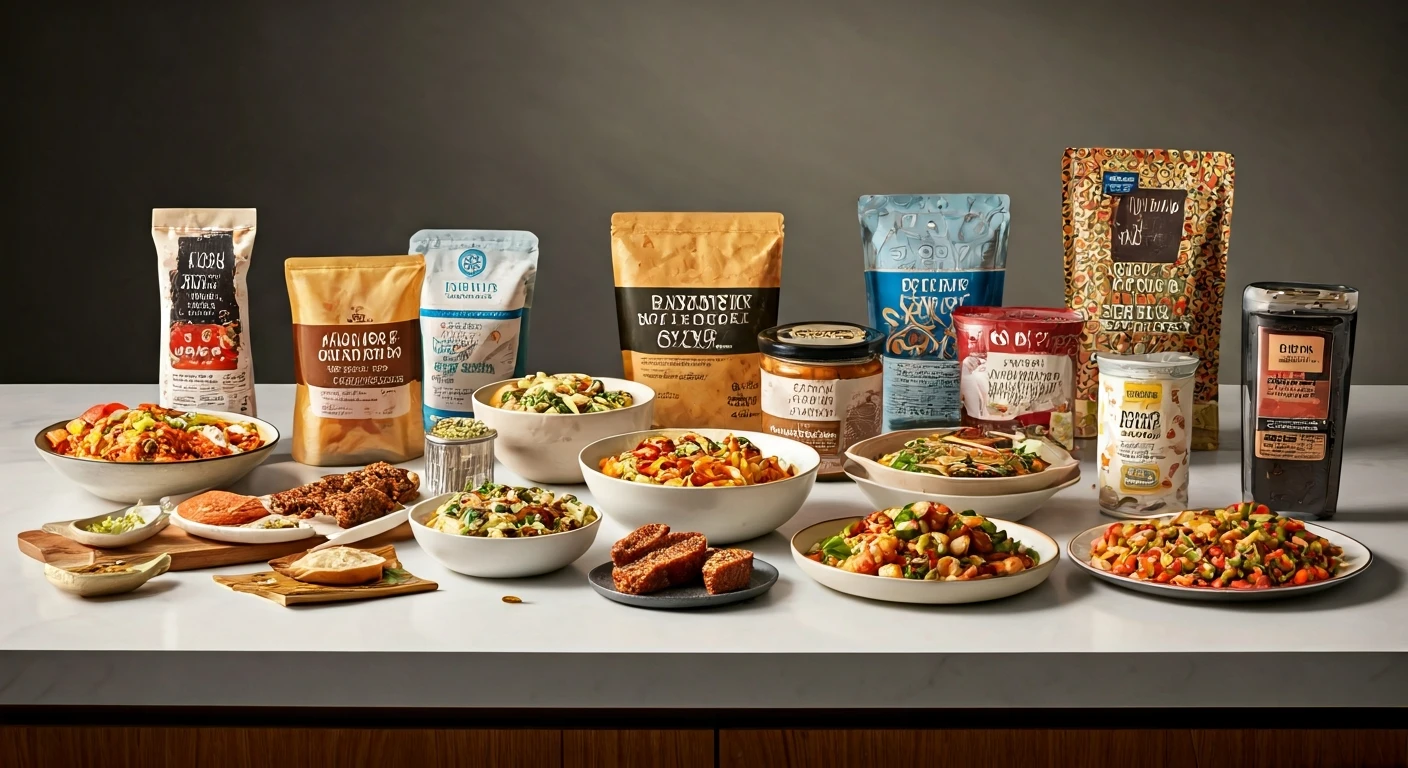
While this trend may have found its early champions in the world of fine dining, its influence is now everywhere. High-end restaurants set the standard, proving that a 10-course vegetable tasting menu could be as mind-blowing as any traditional one. But the real proof of the movement's success is its proliferation in the fast-casual space. Chains like Sweetgreen, Cava, and Mendocino Farms have built empires on the promise of healthy food that actually tastes good. Their menus are packed with interesting textures, complex dressings, roasted vegetables, and globally inspired flavor combinations. They’ve successfully translated the 'flavor-first' wellness ethos for a mass audience, proving that consumers are not only ready for this change but are actively demanding it. You no longer need a reservation and a big budget to eat a healthy meal that feels like a genuine treat.