







The Great Unplugging
Imagine a vacation where your itinerary isn’t dictated by Instagrammable spots and your dinner conversations aren’t interrupted by push notifications. In the Tirthan Valley, a serene ribbon of green tucked away in India’s Himalayan state of Himachal Pradesh,
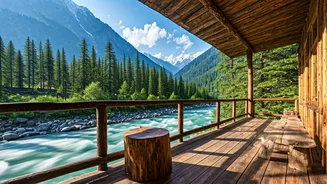
this isn’t a hypothetical wellness challenge; it’s the default setting. For many travelers, particularly those from the hyper-connected United States, the initial discovery that mobile data is patchy at best and non-existent at worst can feel like a crisis. There are no emails to check, no feeds to scroll, no breaking news alerts to shatter the peace. But after the initial, twitchy withdrawal, something remarkable happens. Your senses, long dulled by the blue light of a screen, wake up. You start to notice the gurgle of the Tirthan River as it rushes over smooth, grey stones. You hear the chirping of Himalayan birds you can’t name. You feel the crispness of the mountain air and the warmth of the sun on your skin. This isn’t just an absence of something; it’s the presence of everything else. The so-called “pressure” of mobile data isn’t just about the device in your hand; it’s the unspoken social contract to be always available, always documenting, always performing. In Tirthan, that contract is void.
A Landscape That Demands Your Attention
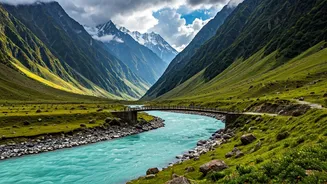
The magic of Tirthan isn’t just about what’s missing. It’s about what’s there to replace it. The valley serves as the gateway to the Great Himalayan National Park, a UNESCO World Heritage Site teeming with pristine forests, alpine meadows, and elusive wildlife like the snow leopard and blue sheep. Without a GPS-enabled map to stare at, you’re forced to actually look at the trail, to ask a local for directions, or to simply trust your guide. Treks that might otherwise become a race to a scenic viewpoint transform into meditative journeys.
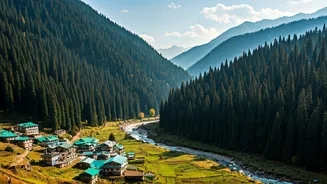
Days are structured by the sun, not by a digital calendar. You might spend a morning trying your hand at trout fishing—the valley is famous for it—or simply find a comfortable rock by the river and read a book, without the urge to photograph the cover for social media. The simple, stone-and-wood architecture of the local villages, the friendly curiosity of their residents, and the taste of a home-cooked meal in a local homestay become the main events. You’re not consuming content; you’re living it.
Rediscovering Human Connection
One of the most profound effects of this forced digital detox is the rediscovery of genuine human interaction. At guesthouses and cafes, strangers talk to each other. With no phones to retreat to, travelers share stories, offer tips about nearby hikes, or play a game of cards. The person who runs your homestay isn’t just a host; they’re your primary source of information and a link to the local culture. You learn their stories and they learn yours, forging a connection that a five-star review on an app could never replicate.
This environment fosters a different kind of travel mindset. It’s less about ticking off a checklist and more about being present. You’re not just a tourist passing through; you become a temporary resident of a slower, more deliberate world. The “pressure” a phone creates is often the pressure to prove you’re having a good time. In Tirthan, you don’t have to prove it to anyone, which frees you up to actually have one.