

The Ultimate Wellness 'Discovery'
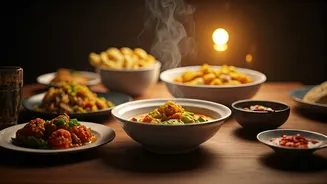
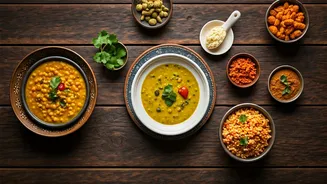
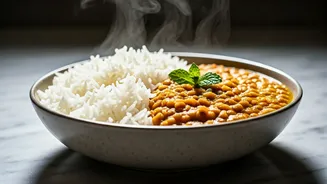
Scroll through your wellness-focused social media feeds, and you might notice a new trend bubbling up. Amid the cold plunges and mushroom coffees, a decidedly low-tech meal is getting a high-tech glow-up: dal and rice. Nutrition influencers and dietitians
are framing this South Asian staple as a perfect, almost magical combination for gut health, stable energy, and plant-based protein. It’s being presented not as a meal, but as a system. A 'hack.' Suddenly, a dish that has nourished billions of people for centuries is being 'discovered' by a Western audience hungry for the next big thing in health.
The Simple Science of a Complete Meal
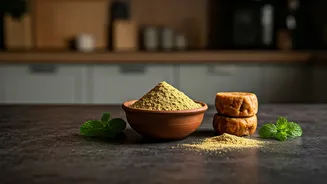
The hype, it turns out, is grounded in solid nutritional science. The 'hack' is simply the power of food synergy. Rice, a grain, is low in the essential amino acid lysine but high in methionine. Dal, which is made from lentils or split pulses, is rich in lysine but low in methionine. When you eat them together, they form a 'complete protein,' providing all nine essential amino acids your body needs to build and repair tissue. It’s the same principle behind other classic food pairings, like beans and cornbread in the American South.
Beyond protein, the combination is a nutritional powerhouse. Dal is packed with fiber, which aids digestion and helps stabilize blood sugar, preventing the energy spike-and-crash often associated with eating plain white rice. It’s also rich in iron, folate, and magnesium. When prepared traditionally with spices like turmeric, cumin, and ginger, it delivers anti-inflammatory benefits, too. In essence, it's a balanced, easily digestible, and deeply nourishing meal all in one bowl.
A Cultural Staple, Not a Trend
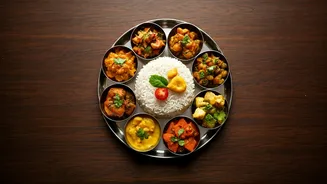
Here’s where the 'hack' narrative gets complicated. For hundreds of millions in India, Nepal, Pakistan, Bangladesh, and Sri Lanka, dal-bhaat (dal and rice) is not a trend; it's the bedrock of daily life. It’s often the first solid food a baby eats and the comforting meal a person recovering from illness turns to. It’s the definition of comfort food—reliable, affordable, and deeply ingrained in the cultural psyche. Every region, and indeed every family, has its own version, from the thin, soupy dals of the south to the thick, creamy versions in the north.
Calling it a 'hack' strips away this profound cultural context. It reframes a symbol of home, comfort, and tradition as a mere functional tool for optimizing one’s body. While the intention may be to praise the meal, the language of 'hacking' reduces a rich culinary heritage into a transactional wellness commodity. It's the dietary equivalent of calling yoga 'power stretching.'
From Kitchen Staple to Wellness Statement
So why is this happening now? The rise of dal-rice in wellness circles is part of a larger pattern of Western culture 'discovering' and rebranding traditional practices from around the world. Think of golden milk lattes (turmeric milk, or haldi doodh) or the mainstreaming of ashwagandha. As more Americans embrace plant-based diets and look for whole-food solutions, ancient culinary traditions offer a treasure trove of time-tested, effective meals.
There's nothing inherently wrong with this cross-cultural appreciation. Sharing food is a beautiful part of the human experience. The issue lies in the framing. When a staple food is presented without its cultural history, it can feel like appropriation—or at the very least, a missed opportunity for deeper understanding. The story of dal-rice isn't that it's a new life hack; it's that communities have been mastering nutrition and flavor in a single pot for generations.