




A Courtyard Comes Alive
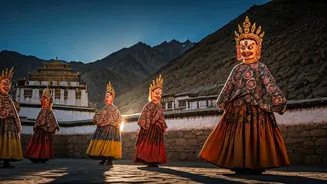
Imagine a vast stone courtyard buzzing with anticipation. Local Ladakhis in traditional dress, monks in deep crimson robes, and travelers from across the globe gather under the intense mountain sun. This is the heart of the Hemis Festival, held annually
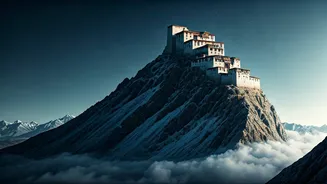
to honor Guru Padmasambhava, the 8th-century master credited with bringing Tantric Buddhism to Tibet and the surrounding regions. The scent of juniper incense hangs in the air, mingling with the low murmur of prayer and conversation. The monastery itself, a centuries-old bastion of Tibetan Buddhism, clings to a gorge, its whitewashed walls and colorful prayer flags a stark contrast to the barren, rocky slopes. It’s more than a setting; it’s an active participant, a silent witness to rituals that have unfolded here for generations.
The Legend of the Second Buddha
To understand Hemis, you must understand its purpose. The festival celebrates the birth anniversary of Guru Padmasambhava, also known as Guru Rinpoche. Revered as the “Second Buddha,” his life was dedicated to subduing the demons and negative forces that hindered the spread of Buddhist teachings. The festival isn't just a party; it's a living narrative. Every dance, every mask, and every chant is a reenactment of his spiritual victories. The core belief is that witnessing these sacred performances purifies the soul, wards off evil, and bestows blessings upon all in attendance. It's this deep-seated spiritual mission that elevates the event from a cultural spectacle to what many describe as a genuinely transcendent experience.
Dance of the Divine Protectors
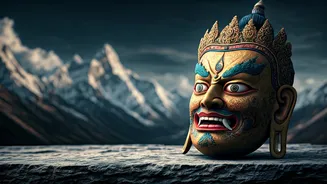
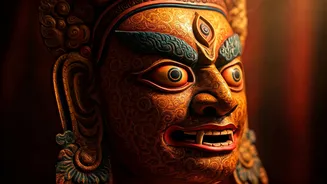
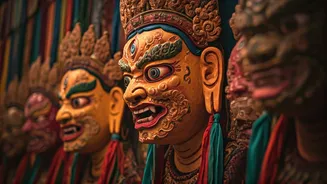
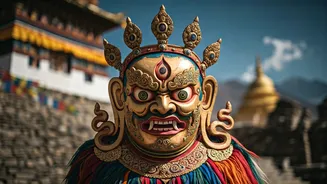
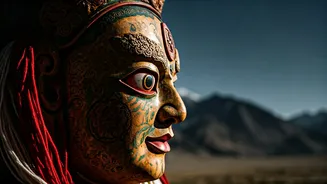
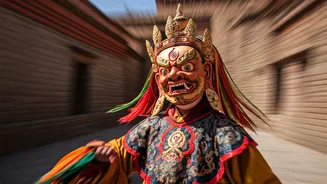
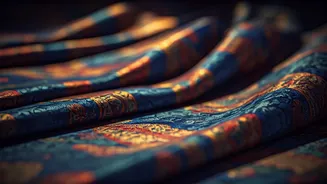
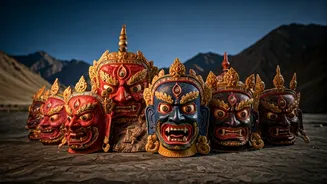
The festival’s centerpiece is the *chaam*, a series of ritualistic masked dances performed by the monastery's monks. To the hypnotic rhythm of booming long horns (*dungchen*), crashing cymbals, and solemn drum beats, figures in elaborate silk brocade costumes and colossal, expressive masks emerge. These are not mere performers; they are temporary vessels for divine beings. The masks depict wrathful and compassionate deities, protectors of the dharma, and skeletal figures symbolizing the impermanence of life. Their movements are slow, deliberate, and powerful—a sacred choreography that tells the story of good triumphing over evil. The slow, circling procession and dramatic gestures are mesmerizing, drawing the entire courtyard into a shared meditative state.
Masks with Sacred Meaning
The masks themselves are the festival’s most iconic feature. Far from being simple disguises, each one is a consecrated object, a physical manifestation of a deity's spirit. Some masks have serene expressions, representing enlightened compassion, while others are terrifyingly fierce, with bared fangs and third eyes, symbolizing the wrathful energy needed to destroy obstacles to enlightenment. One of the climactic moments often involves a dance that culminates in the ritualistic destruction of a dough effigy representing ego and ignorance. By watching these divine forms vanquish a representation of inner demons, observers are believed to confront and conquer their own. This is where the headline's “divine energies” become tangible—it’s the collective focus on spiritual liberation, played out in a grand, public theater.
The Grand Unfurling
For the exceptionally lucky, a visit to Hemis coincides with a rare and deeply auspicious event that occurs only once every 12 years. This is the ceremonial unfurling of the giant *thangka*, a massive, ancient silk tapestry embroidered with the image of Guru Padmasambhava. The sacred scroll, several stories high, is slowly revealed down the side of the monastery as horns blare and prayers intensify. Its display is believed to grant immense spiritual merit and liberation to all who view it. This moment represents the festival's peak, a profound communion between the divine and the mortal, connecting the present-day crowd to a lineage of faith stretching back over a millennium.