




The 'Out of Sight, Out of Mind' Problem
You bought the expensive, insulated, aesthetically pleasing water bottle. You fill it every morning with virtuous intentions. You leave it in your bag, on the passenger seat, or on the corner of the kitchen counter, only to find it nearly full at the end
of the day. Sound familiar? This common failure isn’t a personal flaw; it’s a design flaw in your daily environment. The old adage “out of sight, out of mind” is one of the most powerful, and often frustrating, forces governing human behavior. When it comes to hydration, this principle works against us with brutal efficiency. Your brain is designed to conserve energy by running on autopilot, responding to the most obvious cues in your environment. If the cue to drink water—the bottle itself—is hidden, your brain simply won’t get the memo. You won't consciously decide *not* to drink; you just… won’t.
Hacking Your Habits with Visual Cues
Behavioral science offers a powerful solution, most famously articulated by James Clear in his book *Atomic Habits*. One of the fundamental laws of building a good habit is to “make it obvious.” To break a bad habit, you make the cue invisible. To build a good one, you make the cue as visible and unavoidable as possible. This isn't about motivational posters or setting 17 alarms on your phone. It's about engineering your physical space to trigger the desired action automatically. Think about it: cookie jars on the counter get emptied faster than cookies in the back of the pantry. The TV remote on the coffee table leads to more channel-surfing than one tucked away in a drawer. Your water bottle is no different. By making it a prominent feature of your immediate environment, you are essentially giving your brain a constant, low-effort nudge. Each glance at the bottle is a micro-reminder, a silent invitation to take a sip without requiring conscious thought or a mighty exertion of willpower.
How to Make Your Water Bottle 'Obvious'
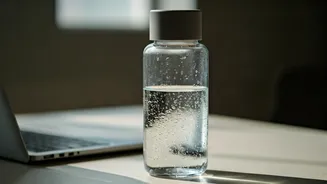
“Bottle visibility” is more than just not hiding it. It’s about strategic placement. The goal is to put your water bottle directly in the path of your daily routines. If you work at a desk, don’t place it off to the side. Put it right between your keyboard and your monitor. You will have to physically move it to see your screen properly, forcing you to acknowledge its existence. Every time you do, you’re more likely to take a drink. Using a transparent or brightly colored bottle enhances this effect. A clear bottle allows you to see your progress (or lack thereof), creating a mini-feedback loop that encourages you to keep going. A neon-yellow or bright-blue bottle does the work for you, catching your eye from across the room and pulling your attention back to your hydration goal. The visual noise it creates is, in this case, a feature, not a bug.
Your New Hydration Hotspots
Ready to put this into practice? Identify the high-traffic zones in your day. Start with your morning: place a full water bottle right next to your coffee maker or toothbrush. Before you can get your caffeine fix, you’ll see your water. At work, the prime real estate is your immediate desk space. When you’re home, don't let it get lost on the kitchen island; put it on the end table next to the spot on the sofa where you always sit. Getting ready to leave the house? Put your water bottle next to your keys and wallet. This simple act of “pairing” an existing habit (grabbing your keys) with a new one (grabbing your water) dramatically increases your chances of success. The goal isn't just to have water nearby; it's to place it so that you cannot help but see it and interact with it dozens of times a day.