






More Than Just Compost
In the quest for a zero-waste or low-waste kitchen, we’ve learned to regrow scallions on our windowsills and turn stale bread into croutons. Yet, the watermelon rind—which can account for up to a third of the fruit's total weight—is often overlooked.
Tossing it contributes to the staggering amount of food waste in the U.S., where households throw away billions of pounds of edible food each year. Transforming these rinds into something delicious isn't just a quaint project; it's a practical and impactful act of sustainability. It honors the resources—water, soil, and labor—that went into growing the fruit in the first place. By seeing the rind as an ingredient instead of garbage, you’re not just saving money; you’re fundamentally shifting your relationship with food.
A Taste of American Ingenuity
Pickled watermelon rind is not a new foodie trend. It’s a classic preservation technique with deep roots in the American South, where resourcefulness has long been a culinary virtue. For generations, home cooks have used a simple brine of vinegar, sugar, and spices to transform the tough, bland rind into a crisp, flavorful condiment. This was nose-to-tail eating for the plant world, a way of ensuring nothing went to waste during seasons of abundance. The practice embodies a spirit of thrift and ingenuity, turning a would-be scrap into a prized pickle that could be enjoyed long after summer faded. Making them today connects your kitchen to that rich history of making more out of less.
What to Expect: Sweet, Tangy, and Crisp
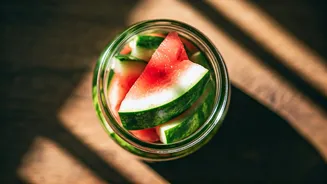
If you’ve never tried a watermelon rind pickle, you’re in for a surprise. Forget the soft, sour dill pickles you know. These are firm, almost crisp-tender, with a translucent, jewel-like appearance. The flavor is a perfect balancing act: delightfully sweet from the sugar, sharply tangy from the vinegar, and warmly aromatic from spices like cinnamon, cloves, and allspice. They are an incredibly versatile condiment. Serve them alongside rich, savory dishes like pulled pork or fried chicken to cut through the fat. Chop them up and add them to tuna or chicken salad for a sweet-sour crunch. Or, simply place them on a cheese board, where their unique flavor profile provides a brilliant contrast to sharp cheddars and creamy bries.
The Recipe: Classic Watermelon Rind Pickles
This recipe is a straightforward classic that yields about two pint jars of pickles. The most important step is removing the tough green skin and the pink flesh, leaving only the firm, white part of the rind.
Ingredients:
- About 4-5 cups of watermelon rind (from a medium-sized watermelon), white part only, cut into 1-inch cubes
- 1/4 cup salt
- 4 cups of water, for soaking
- 2 cups granulated sugar
- 1 1/2 cups apple cider vinegar
- 1 cup water, for pickling liquid
- 1 cinnamon stick
- 1 teaspoon whole cloves
- 1 teaspoon whole allspice
Instructions:
1. Prep the Rind: Carefully peel the tough, dark green outer skin from the watermelon rind using a vegetable peeler or a sharp knife. Scrape off any remaining pink flesh. Cut the white rind into uniform 1-inch cubes.
2. Soak the Rind: In a large bowl, dissolve the salt in 4 cups of water. Add the rind cubes, making sure they are fully submerged. Cover and let them soak overnight (or for at least 6 hours) in the refrigerator. This step is crucial for drawing out excess water and ensuring a crisp final pickle.
3. Rinse and Cook: Drain the rinds from the saltwater and rinse them thoroughly under cold running water. Place the rinsed rinds in a large pot, cover with fresh water, and bring to a boil. Reduce the heat and simmer for about 10-15 minutes, or until the rinds are just tender enough to be pierced with a fork. Drain well.
4. Make the Brine: In the same pot, combine the sugar, vinegar, 1 cup of water, cinnamon stick, cloves, and allspice. Bring the mixture to a boil, stirring until the sugar is completely dissolved.
5. Pickle the Rind: Add the cooked, drained rinds to the boiling brine. Reduce the heat to a simmer and cook for about 20-30 minutes, until the rinds become translucent and glossy.
6. Jar and Store: Using a slotted spoon, transfer the hot rinds into two clean pint jars. Pour the hot brine over the rinds to cover them completely, including the whole spices. Seal the jars and let them cool to room temperature before storing them in the refrigerator. For the best flavor, let the pickles cure in the fridge for at least a week before eating.