



Johan Cruyff (Netherlands)
More than just a player, Johan Cruyff was a revolutionary. He was the on-field conductor of the Netherlands' mesmerizing 'Total Football' system in the 1970s, where players seamlessly interchanged positions. The Dutch team, with Cruyff as its bewitching
star, danced its way to the 1974 World Cup final. He even invented a new move—the 'Cruyff Turn'—that left a Swedish defender grasping at air. But in the final against West Germany, the magic ran out. Despite scoring an early penalty, the Dutch lost 2-1. Cruyff, a chain-smoking iconoclast, refused to participate in the 1978 tournament due to security concerns after a kidnapping attempt. His genius reshaped the sport, but the World Cup remained the one masterpiece he never completed.
Cristiano Ronaldo (Portugal)
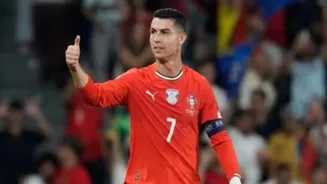
For nearly two decades, Cristiano Ronaldo has been a monument to physical perfection, relentless ambition, and staggering goal-scoring. With a trophy cabinet overflowing with Champions League titles and individual accolades like the Ballon d'Or, his club career is almost without peer. Yet, on the international stage, the World Cup has been a source of recurring frustration. He has scored in a record five different tournaments, a testament to his incredible longevity. However, his Portuguese teams have consistently fallen short. His best run came in his first attempt in 2006, reaching the semifinals. Since then, it’s been a story of early exits and the immense pressure of carrying a nation’s hopes almost single-handedly. He has a European Championship, but the biggest prize of all has eluded him.
Ferenc Puskás (Hungary)
Before Pelé, before Maradona, there was the 'Galloping Major.' Ferenc Puskás was the leader of Hungary's 'Mighty Magyars,' arguably the greatest national team to never win the World Cup. In the early 1950s, they were untouchable, routing England 6-3 at Wembley in the 'Match of the Century.' They entered the 1954 World Cup as overwhelming favorites, and Puskás, despite playing the final with a hairline fracture in his ankle, put Hungary ahead against West Germany. In one of soccer’s greatest upsets, known as the 'Miracle of Bern,' the Germans fought back to win 3-2. The 1956 Hungarian Revolution scattered the team across Europe, ending the Magyars' golden era and Puskás’s chance at redemption.
Paolo Maldini (Italy)
They call him 'Il Capitano.' For a quarter-century, Paolo Maldini was the epitome of defensive elegance and integrity for both AC Milan and Italy. He was a master of the art, a defender who was so positionally perfect he rarely needed to make a tackle. He played in four World Cups for the Azzurri, and each one ended in heartbreak, often in the cruelest way possible. In 1990, it was a semifinal penalty shootout loss at home. In 1994, it was a devastating shootout loss to Brazil in the final. In 1998, another shootout exit. And in 2002, a controversial golden-goal defeat to co-host South Korea. Maldini holds the record for the most minutes played in World Cup history without ever winning it, a brutal testament to his incredible consistency and terrible luck.
Alfredo Di Stéfano (Argentina/Colombia/Spain)
Perhaps the most tragic 'what if' in soccer history. Many who saw him play, including Pelé and Bobby Charlton, considered Alfredo Di Stéfano the most complete player ever. He was the engine of the Real Madrid team that won five consecutive European Cups. But the World Cup? He never played a single minute in the finals. His story is a bizarre maze of geopolitical misfortune. Argentina, his birth country, boycotted the 1950 tournament. By 1954, he was ineligible after playing for Colombia. He then gained Spanish citizenship and led Spain to qualify for the 1962 tournament, only for a last-minute muscle injury to rule him out. The man who dominated the club game was a ghost on the world's biggest stage.