






Start with Why: The Need for Enrichment
Before you start building, it's crucial to understand why this project matters. Indoor cats live longer, safer lives, but often at the cost of natural stimulation. A lack of enrichment can lead to boredom, stress, and behavioral issues like over-grooming
or furniture scratching. A sensory track isn't just a playground; it's a form of preventative healthcare. By engaging their natural instincts to climb, scratch, smell, and observe, you are providing essential mental and physical exercise. A well-designed space allows them to experience the sounds and smells of the outdoors without the dangers, satisfying their innate curiosity and leading to a happier, more balanced companion.
Embrace the Vertical World
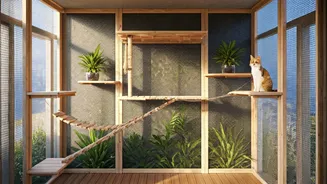
Cats are vertical creatures. They instinctively seek high perches for safety and observation. The “multilevel” aspect is the core of this transformation. Think beyond the floor. Use the walls and railings (safely enclosed, of course) to create a dynamic environment. Install sturdy, weather-resistant shelves at varying heights, connected by ramps or wide planks. A vertical climbing pole wrapped in durable sisal rope can serve as a central pillar. The goal is to create a pathway that encourages movement up and down, allowing your cat to survey their domain from different vantage points. This use of vertical space is especially effective on small terraces, as it expands your cat’s usable territory without taking up valuable floor space.
Curate a Symphony of Scent
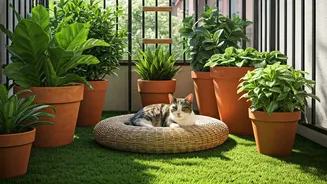
A cat’s sense of smell is a powerful tool for exploring the world. Your sensory track should be a tapestry of intriguing, cat-safe aromas. Incorporate planters with feline-friendly herbs. Catnip and silver vine are obvious choices for their euphoric effects, but also consider cat grass (wheat, oat, or barley grass) for nibbling, which can aid digestion. Valerian and catmint are other fragrant options that many felines find irresistible. Arrange these plants along the track so your cat can rub against them, sniff them, and enjoy a multi-sensory experience. Always double-check with the ASPCA's list of toxic and non-toxic plants before introducing any new foliage to your cat's environment.
Incorporate Varied Textures and Sounds
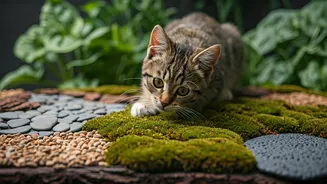
Stimulation goes beyond sight and smell. A truly immersive track engages the sense of touch. Use a variety of materials to create different tactile experiences. A flat, sun-warmed slate stone makes for a perfect lounging spot. A log or piece of driftwood provides a rough, natural surface for scratching and scent-marking. A patch of artificial turf can mimic the feel of grass under their paws. Even the sounds of the space can be curated. While the natural city sounds provide a backdrop, you can add a small, quiet bamboo chime that moves gently in the breeze or plant ornamental grasses that rustle softly. These subtle additions create a rich, layered environment that keeps a cat engaged day after day.
Safety is Not an Option—It’s the Foundation
None of this is possible without uncompromising safety. A terrace playground must be fully enclosed. Professional “catio” netting or wire mesh is the best option, as it’s strong, durable, and provides an unobstructed view. Ensure there are no gaps your cat could squeeze through. Check the enclosure regularly for any wear and tear. All shelves and structures must be securely fastened and able to support more than your cat’s weight. Use non-toxic wood sealants and paints. Finally, ensure the space provides both sun and shade, so your cat can thermoregulate comfortably, and always provide a bowl of fresh water. A safe space is a space where your cat—and you—can truly relax.