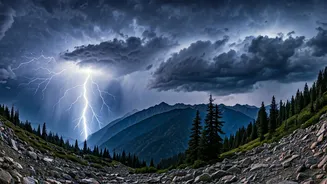










The Lure of the Himalayan Foothills
For a dedicated community of weather photographers and storm chasers, the Kumaon region in the northern Indian state of Uttarakhand is a bucket-list destination. Nestled against the colossal backdrop of the Himalayas, this area of rolling hills and serene
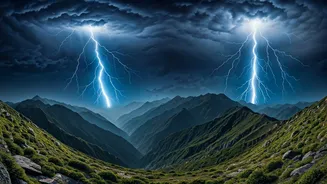
lakes becomes a theater of atmospheric violence every year between April and June. Before the monsoon rains arrive in full force, a volatile transitional period spawns some of the most spectacular lightning storms on Earth. While storm chasing in the American Midwest offers vast, open skies, Kumaon provides something different: a dramatic, mountainous canvas. The jagged peaks and deep valleys add a sense of scale and majesty to the electric light show, turning a powerful weather event into a scene of almost mythical grandeur.
The Science of the Spectacle
The phenomenon isn’t random; it’s a direct result of Kumaon’s unique geography. During the pre-monsoon season, hot, moist air sweeping in from the plains of northern India collides with the cool, dense air descending from the high-altitude Himalayan ranges. This collision creates immense atmospheric instability. The warm air is forced rapidly upward—a process known as orographic lift—forming towering cumulonimbus clouds that can climb tens of thousands of feet into the sky. These cloud formations are potent electrical generators. As water droplets and ice crystals churn within them, they build up enormous static charges that are eventually unleashed in breathtaking displays of cloud-to-ground and intra-cloud lightning. The result is a highly concentrated, predictable season of storms that photographers can plan their trips around.
A Photographer’s Pilgrimage
The term “rush” might conjure images of a chaotic stampede, but the reality is more of a patient, seasonal pilgrimage. The photographers who travel to Kumaon are specialists. They are part meteorologist, part artist, and part adventurer. They spend days, sometimes weeks, scouting locations around towns like Almora, Nainital, and Pithoragarh. They study weather maps, track wind patterns, and look for the perfect vantage point—often a remote ridge or clifftop that offers an unobstructed view of the coming storm. The goal isn't just to capture a random lightning bolt. It’s to frame it perfectly against a temple spire, a silhouetted mountain range, or the tranquil waters of a lake. It’s a game of patience and perseverance. Hours of waiting can culminate in a few frantic seconds of shooting as the sky erupts. For every stunning photograph that makes it to Instagram or a gallery, there are dozens of nights spent watching, waiting, and getting nothing but rain.
Capturing the 'Abode of the Gods'
Photographing lightning here is technically and physically demanding. The terrain is rugged, and the weather is unpredictable. Photographers need not only high-quality cameras and tripods but also lightning triggers—devices that automatically fire the shutter the instant a flash is detected. Many prefer to use long exposures, leaving the camera’s shutter open for 15 to 30 seconds at a time to capture multiple bolts in a single, composite frame. This technique transforms the chaotic energy of the storm into a delicate, web-like pattern of light across the sky. The region is known in Hindu mythology as Devbhoomi, or the “Abode of the Gods.” Looking at the images these photographers capture—with spiderwebs of lightning illuminating peaks once thought to be the homes of deities—it’s easy to understand why. They aren’t just documenting a weather event; they are capturing a primal force of nature in a place that has been considered sacred for millennia.