






The Centerpiece of Celebration
In the northern Indian state of Himachal Pradesh, particularly in tribal districts like Kinnaur and Shimla, no major event—be it a wedding, religious festival, or local fair—is complete without a brass band. But these are not the quaint, orderly ensembles
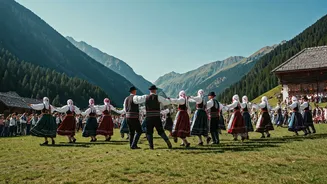
you might imagine from a British period drama. These are sonic powerhouses, the living, breathing engine of the festivities. Known locally as *baja*, these bands are hired not just for background music but to drive the main event: hours-long, communal folk dances. For the host family, booking the most popular, most energetic band is a significant status symbol, an investment that can make or break the entire celebration.
A Colonial Echo Remixed
The very presence of brass bands in the Himalayas is a curious twist of history. They are a colonial legacy, introduced by the British army in the 19th century. But like so many foreign influences in India, they weren’t just copied; they were absorbed, transformed, and made distinctly local. Over generations, brass instruments like trumpets, tubas, and clarinets began to replace or supplement traditional Himachali instruments like the long, horn-like *karnal* and the *shehnai* oboe. The bands learned to play the intricate, fast-paced melodies of local folk music, particularly the tunes meant for *Nati*, the region's most popular traditional dance. What was once a symbol of imperial pomp became an indispensable sound of local identity.
Defining 'Heavy Energy'
So what are these “heavy energy tracks”? Don’t think heavy metal or EDM, at least not in the Western sense. The “heaviness” comes from sheer volume, speed, and relentless rhythm. Bands play traditional *Pahari* (mountain) folk tunes, but they play them at a blistering tempo, often amplified to a deafening roar. The goal is to create a hypnotic, high-octane soundscape that fuels the dancers, who link arms and move in large circles for hours on end. The music is cyclical, repetitive, and designed to induce a state of communal trance and pure physical exhaustion. In this context, “energy” is literal—it’s the raw sonic fuel required to keep a hundred people dancing from dusk till dawn.
Youth, Volume, and Viral Fame
The push for ever-louder, ever-faster music is largely a generational phenomenon. Younger Himachalis, connected to the world via smartphones, have developed an appetite for high-intensity experiences. A band’s popularity now often depends on its ability to deliver the most powerful performance. Viral videos on YouTube and Instagram show off bands engaged in friendly competition, each trying to outdo the other with faster tempos and more complex solos. This has created a feedback loop: the more energetic the band, the more likely they are to get booked, and the more their videos are shared, solidifying their reputation. Technology has played its part, too, with better amplification allowing these acoustic ensembles to achieve concert-level volume in a mountain valley.
Tradition, Amplified
It would be easy to see this trend as a corruption of a quiet folk tradition, but that misses the point. This isn’t the death of culture; it’s culture in motion. The melodies are still traditional, the dances are still ancient, and the band’s social function remains unchanged. What’s different is the delivery mechanism. The Himachali brass band phenomenon is a perfect example of how traditions stay alive: they don't remain static in a museum. They adapt, absorb new influences, and crank up the volume to compete for the attention of a new generation. They are preserving the spirit of communal celebration by changing its sound, ensuring that the heart of the village party beats faster and louder than ever.