





The Endless, Soulless Scroll
We were promised that smartphones would be the ultimate memory keepers. In a way, they are. They capture everything. And that’s precisely the problem. Our camera rolls have become digital junk drawers, overflowing with thousands of images we rarely revisit.
The paradox of the digital age is that by trying to document every moment, we risk devaluing all of them. The act of photography, once a deliberate choice, is now an almost subconscious reflex. We snap a picture of a meal, a landmark, or a street sign, and then immediately move on, outsourcing the act of remembering to our device. The result isn't a stronger connection to the experience, but a strange detachment. The phone remembers the what and the where, but the *feeling*—the scent of the bakery, the chill in the air, the joke you shared right after the photo was taken—is often lost.
Rediscovering Pen and Paper
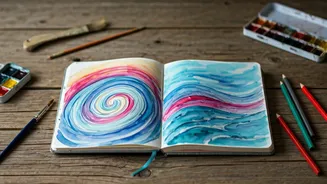
In response to this digital fatigue, a growing number of travelers are turning back to an analog tool: the travel journal. This isn’t just about nostalgia; it’s a deliberate move toward mindfulness. The physical act of writing is slower and more intentional than tapping a screen. Neurologically, forming letters by hand engages the brain more actively than typing, which can lead to deeper processing and stronger memory formation. When you sit down to write about your day, you’re not just listing events. You’re curating them. You’re reflecting on what moved you, what surprised you, and what mattered most. This process transforms you from a passive content collector into an active storyteller of your own adventure. It forces you to pause, to observe your surroundings with greater detail, and to connect with your own thoughts and emotions in a way that scrolling through a feed simply can’t replicate.
Curation Over Collection
A phone gallery is a collection; a travel journal is a curation. Your phone can hold 10,000 photos, but a journal has limited pages. This constraint is its greatest strength. You can’t document everything, so you must choose. Do you describe the taste of the street food or the expression on the vendor’s face? Do you tape in the ticket from the museum or sketch the weird sculpture in the lobby? This act of choosing is what builds a powerful memory. It’s the art of deciding what is worth holding onto. While your camera roll might contain 15 near-identical photos of a single monument, your journal might hold a single, powerful sentence about how standing in its shadow made you feel. One is data; the other is meaning. This selective process creates a highlight reel that’s personal and potent, free from the digital clutter of screenshots, duplicates, and out-of-focus shots.
A Multi-Sensory Artifact
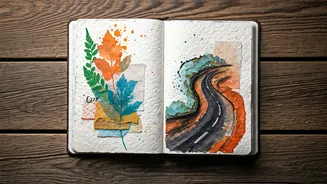
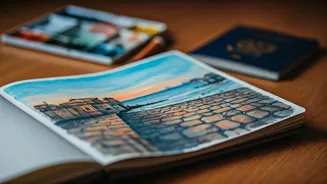
The modern travel journal is rarely just pages of dense text. It’s a multi-sensory scrapbook, a physical artifact of a time and place. It’s a home for the train ticket from a scenic journey, the coaster from a pub where you met a new friend, a pressed flower from a mountainside hike, or a business card from a shop you loved. These tangible scraps become powerful memory triggers. Years later, you can run your fingers over a faded receipt and be instantly transported back to that specific café. A phone photo can show you what your coffee looked like, but the taped-in sugar packet can evoke the entire experience. The journal becomes a treasure box, a one-of-a-kind object that tells a story far richer and more personal than a pristine, uniform grid of digital squares ever could.