





The Great Thirst Quenched
For most of the year, the Aravalli Hills surrounding Udaipur are a study in beige and brown, baked dry by the relentless Rajasthan sun. Then comes the monsoon, typically from July to September. The arrival of the rains is less an event and more a resurrection.
The first drops release a heady, earthy scent from the parched ground—a perfume known as petrichor. Within weeks, the formerly barren hills are carpeted in a shocking, vibrant green. The air, once thick with dust, becomes crisp and cool. This dramatic environmental shift is the foundation of the monsoon vibe; it's a city-wide sigh of relief, a collective exhale you can feel in the air as nature’s great thirst is finally quenched.
A City Designed for Rain
Udaipur isn't called the 'City of Lakes' by accident. Its famous water bodies—Lake Pichola, Fateh Sagar Lake, and others—are not natural but part of a sophisticated, centuries-old interconnected system of man-made lakes and dams. This network was engineered by the region's Maharajas to capture precious rainwater in a desert state. For most of the year, this system is a beautiful, but static, backdrop. During the monsoon, however, it comes alive. You can witness the city’s historical purpose in action as water levels rise, channels flow, and the lakes swell to their intended glory. It’s a powerful reminder that Udaipur’s splendor wasn't just built for aesthetics, but for survival, and the monsoon is when the city’s very DNA is on full display.
Palaces That Truly Float
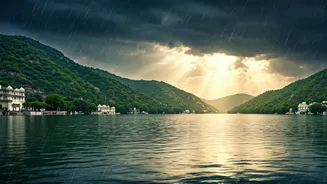
The iconic images of Udaipur almost always feature the ethereal Lake Palace, which seems to float on the waters of Lake Pichola. But only during a healthy monsoon does this illusion become truly breathtaking reality. As the lake fills, its waters lap right at the foundations of the marble palaces and historic ghats (steps leading to the water). The world-famous Taj Lake Palace and the Jag Mandir island palace are no longer just sitting *in* a lake; they are enveloped by it. The water’s surface, often choppy under a dramatic, overcast sky, shatters the reflections of the city’s architecture into a million shimmering points of light. A boat ride during this time feels less like a tour and more like gliding through a living watercolour painting.
A Cultural Awakening
The arrival of rain in India is a deeply cultural event, synonymous with romance, rebirth, and celebration. In Udaipur, this translates into a palpable shift in public mood. The scorching heat of summer gives way to pleasant, cooler days, bringing locals out onto the streets. It’s the season for festivals like Teej, where women in brightly colored sarees celebrate the monsoon with songs and swings hung from trees. It’s also the time for indulging in monsoon-specific comfort foods. Roadside stalls do a roaring trade in hot, sweet chai and crispy fried pakoras—the perfect snack to savor while watching the downpour from the shelter of a lakeside café. The entire city feels energized, joyful, and more authentically local.
The Romance of an Overcast Sky
Ultimately, the 'peak atmospheric vibe' comes from the light. Gone is the harsh, direct sunlight of the dry season. In its place is a soft, diffused light filtered through layers of heavy clouds. This moody illumination softens the edges of the city's grand architecture, lending a romantic, almost melancholic beauty to the landscape. The sky puts on a daily show of rolling, dark-grey clouds, occasionally broken by dramatic shafts of sunlight. The sound of rain drumming on rooftops and lake surfaces becomes the city's soundtrack. It’s an immersive, multi-sensory experience that encourages you to slow down, find a cozy window seat, and simply watch the world transform.