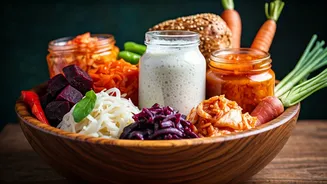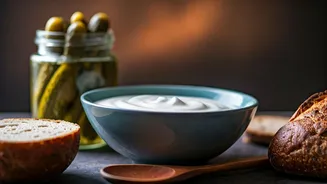






The Big Reveal: Homemade Curd
The gut health 'trend' cherished across India isn't a newfangled supplement or a complicated ferment—it's homemade yogurt, known as 'dahi' or 'curd.' Forget the sweetened, fruit-on-the-bottom tubs in the supermarket dairy aisle. This is a living, breathing
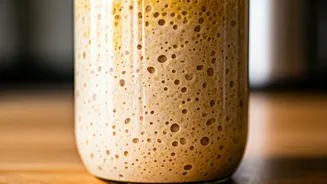
culinary staple, often made fresh daily in millions of households. Dahi is not just a food; it's a ritual. The process is simple: warm milk is inoculated with a small amount of a previous batch's curd (the 'starter'), then left to set in a warm place for several hours. The result is a soft, tangy, and profoundly comforting food that forms the backbone of countless meals.
Why It's Not Your Supermarket Yogurt
The key difference between traditional dahi and most commercially produced yogurt in the U.S. lies in the culture. The starter, often called 'jaaman,' is a living heirloom in many families, passed down through generations. This creates a complex ecosystem of wild, native bacteria unique to that specific culture and environment. While commercial yogurts use standardized, lab-developed strains of bacteria (like Lactobacillus bulgaricus and Streptococcus thermophilus), homemade dahi boasts a diverse and dynamic consortium of microorganisms. It’s this biodiversity that many believe gives it a superior gut-health edge. Furthermore, it contains no added sugars, thickeners, or preservatives, offering a pure, unadulterated dose of probiotics.
The Science of Simplicity
At its core, the dahi habit is a masterclass in probiotic consumption. Probiotics are live microorganisms that, when consumed in adequate amounts, confer a health benefit on the host—primarily by supporting the microbiome in our gut. The fermentation process in making dahi populates the milk with billions of these beneficial bacteria. A diet rich in such foods is linked to improved digestion, enhanced nutrient absorption, and a stronger immune system. While the West is catching on with fermented foods, dahi represents a practice that has been intuitively understood and practiced for millennia as essential for digestive balance, especially in a cuisine known for its rich spices.
A Staple, Not a Side Show
In the American diet, yogurt is often relegated to a breakfast bowl or a smoothie. In India, dahi is a versatile workhorse. It’s served as a cooling counterpoint to spicy curries, whipped into the refreshing drink 'lassi,' or thinned into a spiced buttermilk called 'chaas' that’s drunk after meals to aid digestion. It's the base for 'raita,' a savory dip mixed with vegetables and herbs, and used as a tenderizing marinade for meats and paneer. This constant, integrated presence in the diet ensures a regular intake of probiotics, not as a separate 'health' step, but as a natural and delicious part of everyday eating.
Can You Try This at Home?
Absolutely. The beauty of dahi is its accessibility. You don’t need a fancy yogurt maker. The process involves gently heating whole milk until it's warm to the touch (not boiling), then stirring in a tablespoon or two of a live-culture plain yogurt as your starter. Cover the mixture and leave it in a warm, undisturbed spot—like an oven with the light on—for 6 to 12 hours, or until it sets into a firm but jiggly curd. Once set, refrigerate it to stop the fermentation. The taste and texture will evolve as you keep using your own dahi as the starter for the next batch, creating a culture that is uniquely yours.