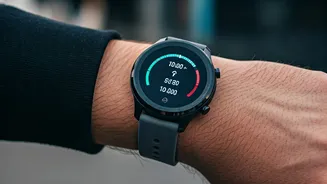









The Marketing Behind the Movement
The 10,000-steps-a-day goal feels so ingrained in our wellness culture that you’d assume it came from a major public health organization or a landmark scientific study. The truth is far more commercial. The concept originated in Japan in the 1960s, not
from a lab, but from a marketing department. A company was preparing to launch a new pedometer ahead of the 1964 Tokyo Olympics. Seeking a catchy name and a clear goal for users, they called their device the 'Manpo-kei,' which translates to '10,000 steps meter.' The number was chosen because it sounded good, was easy to remember, and represented a significant but achievable challenge for the average person. It was a brilliant piece of marketing that successfully equated a product with a health objective. The idea caught on, spreading globally over the decades until it was adopted by fitness tracker companies and became the de facto benchmark for daily movement, all without a shred of initial scientific evidence to back it up.
What Modern Science Actually Says
For years, researchers have been playing catch-up, trying to determine if this accidental health goal holds any water. The consensus from numerous recent, large-scale studies is that while 10,000 steps is a worthy goal, the major health benefits kick in much earlier and can plateau before you hit that number. A prominent 2019 study published in JAMA Internal Medicine focusing on older women found that mortality rates decreased significantly with as few as 4,400 steps per day compared to more sedentary individuals. The benefits continued to accrue up to about 7,500 steps per day, at which point they leveled off. Another major meta-analysis from 2022 published in The Lancet looked at a broader age range and found a similar pattern: the risk of premature death began to drop steeply around 4,000 steps and continued to fall until about 8,000 steps for older adults and up to 10,000 for younger adults. The key takeaway isn't that 10,000 is wrong, but that it's not a magical, one-size-fits-all threshold. Any significant increase from a low baseline—going from 2,000 to 4,000 steps, for instance—delivers substantial health rewards.
It's Also About How You Step
Focusing solely on the total count misses another crucial piece of the puzzle: intensity. The pace of your steps matters. Strolling casually to get your numbers up is good, but walking briskly is even better. Public health guidelines, including those from the CDC, often recommend 150 minutes of moderate-intensity aerobic activity per week. A brisk walk—one where you can still talk but not sing—is a perfect example. Studies have shown that a higher step rate, or cadence, is associated with additional health benefits, independent of the total volume. A 30-minute power walk can contribute more to your cardiovascular health than an hour of slow ambling, even if the step count is lower. So, instead of just chasing a number, it can be more effective to incorporate dedicated, faster-paced walks into your routine. This ensures you’re not just moving, but actively challenging your heart and lungs.
The Real Goal: Moving More Than Yesterday
The greatest value of the 10,000-step trend may be that it gamified movement and made millions of people more aware of their sedentary habits. It provides a simple, measurable target in a world of complex health advice. But obsessing over hitting that exact number can also lead to frustration or a sense of failure. The healthier mindset is to use a step count as a tool for personal improvement, not as a pass/fail test. If you currently average 3,000 steps a day, aiming for 4,000 is a massive victory. The goal is progress, not perfection. The most significant health gains come from moving from a sedentary lifestyle to a moderately active one. Breaking up long periods of sitting with short walks, taking the stairs, or parking a little farther away all contribute to your overall activity level and well-being, regardless of what the final number on your tracker says at midnight.