






Beyond the Six-Pack
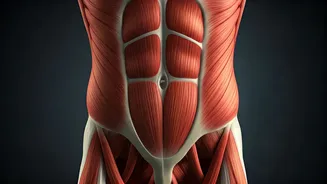
In the West, the term “core workout” often conjures images of sit-ups, planks, and the pursuit of visible abdominal muscles. But in the context of modern Indian fitness, the “core” is understood in a much broader, more profound sense. It’s not just the rectus
abdominis—the “six-pack” muscles—but the entire musculature of the torso, front and back. This includes the obliques, the transverse abdominis (the body’s natural corset), the lower back extensors, the glutes, and the hip flexors. Functional strength, in this view, is the ability of this entire system to work in harmony to stabilize the spine, control movement, and transfer power efficiently throughout the body. The goal isn’t isolated muscle definition; it’s creating a stable and powerful center from which all other movement originates, whether you’re lifting a suitcase or executing a complex athletic feat.
Wisdom from Ancient Warriors
This emphasis on a deep, functional core isn’t a new fitness fad; it’s a revival of ancient principles. Many of these modern workouts are inspired by traditional Indian physical cultures, particularly Kalaripayattu and Pehlwani. Kalaripayattu, one of the world's oldest martial arts, requires practitioners to maintain low stances and generate explosive, rotational power—all of which is impossible without an incredibly strong and stable core. Similarly, Pehlwani, or traditional Indian wrestling, involves grappling, lifting, and resisting opponents, demanding a foundation of core strength that integrates the hips and shoulders. Wrestlers have for centuries trained with tools like the gada (mace) and jori (clubs), which are specifically designed to build this kind_of integrated, three-dimensional strength. The swinging movements challenge the body’s stability and rotational control in ways that a simple crunch or leg lift never could.
The Real Core of Yoga
While Western yoga is often focused on flexibility and flowing sequences, its traditional roots are deeply entwined with the concept of core control. In classical Hatha yoga, this is expressed through the bandhas, or energetic body locks. The uddiyana bandha (abdominal lock) and mula bandha (root lock) are powerful techniques for engaging the deepest layers of the abdominal and pelvic floor muscles. They aren't just physical actions but are central to stabilizing the spine, controlling breath (pranayama), and directing the flow of energy. A stable posture in a challenging yoga pose isn't held by arm or leg strength alone; it's supported from the body’s center. This principle—that strength and stability radiate from the inside out—is a cornerstone of the modern Indian fitness philosophy.
Modern Movement, Timeless Benefits
So why is this approach gaining traction now? Trainers and fitness enthusiasts are increasingly recognizing the limitations of purely aesthetic-focused training. A lifestyle of sitting at desks and looking down at phones has created a population with weak posterior chains, tight hips, and unstable cores, leading to chronic back pain and injury. Modern Indian fitness methods offer a direct antidote. By focusing on functional, full-body movements that build strength in multiple planes of motion, they create bodies that are not just strong but also resilient, mobile, and less prone to injury. This philosophy prioritizes movement quality over sheer quantity, teaching people to connect with their bodies in a more intuitive way. It’s a shift from training muscles in isolation to training movements that serve you in everyday life, building a foundation of strength that is truly supportive and enduring.