


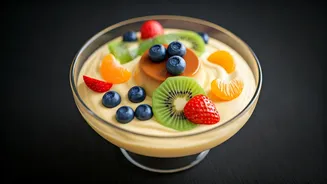
The Anatomy of Comfort
For the uninitiated, fruit custard is deceptively simple. It’s not a dramatic, multi-layered cake or a technically demanding pastry. At its core, it’s a humble concoction of milk, sugar, and custard powder—often the kind from a canary-yellow tin—cooked
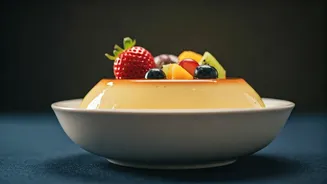
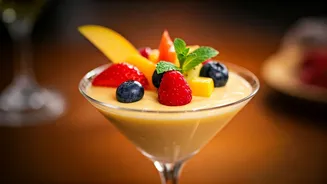
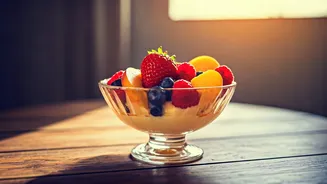
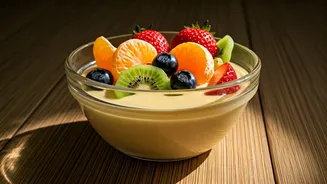
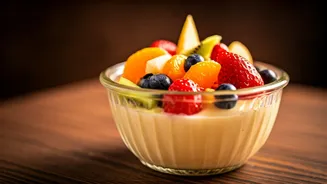
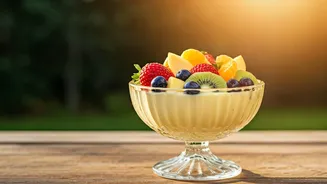
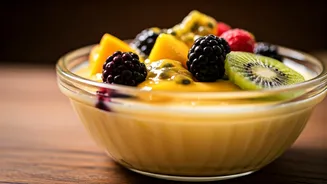
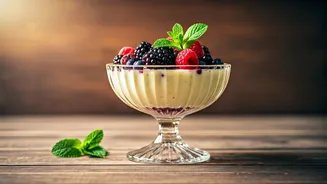
until thickened, then chilled. Into this silky, pale-yellow pool goes a riot of chopped fresh fruit: bananas, apples, grapes, mangoes, pomegranate seeds. There are no strict rules, only guidelines informed by what’s in season and what’s in the fridge. The result is a dessert that exists in a perfect state of gentle contrast: the cool, smooth custard against the crisp, sweet bursts of fruit. It’s a dish that requires no professional skill, just a bit of patience while it sets in the refrigerator, its flavors quietly melding into a singular, soothing whole.
A Potluck Hero and Cultural Bridge
While versions of custard exist globally, the specific fruit-laden bowl we’re talking about holds a special place in many South Asian, Desi, and Caribbean households, both at home and across the diaspora in America. It is the undisputed champion of the potluck, the barbecue, and the family Eid or Diwali gathering. Why? Because it’s a culinary peacemaker. It’s sweet but not too sweet, familiar enough for the elders, and loved by the kids. For many immigrant families, it became a perfect bridge. The core recipe, using Bird's Custard Powder, was a remnant of British colonial influence in their home countries, but the execution was pure adaptation. It allowed for the use of American fruits found in local grocery stores—apples and grapes instead of guavas—creating a dish that was simultaneously a taste of the past and a statement of the present. It’s a dessert that says, “We are here, and we’ve brought our flavors with us.”
The Gentle Power of Soft Food
The headline calls it the “softest” nostalgia, and that texture is key to its emotional power. There is a deep, almost primal comfort in soft foods. They evoke feelings of care and safety, harkening back to childhood when a scraped knee might be soothed with a bowl of ice cream or a fever with a spoonful of pudding. Fruit custard is the epitome of this principle. It’s easy to eat. It requires no effort, no aggressive chewing. It simply yields. In a world that often feels sharp-edged and demanding, a bowl of fruit custard is an act of gentle surrender. It doesn’t challenge the palate; it coddles it. This softness is not a weakness but a strength, a deliberate choice to offer comfort over complexity, solace over spectacle.
Beautifully, Perfectly Imperfect
You will never see fruit custard in a Michelin-starred tasting menu. It’s not Instagram-perfect; the bananas inevitably brown a little, and the fruits might bleed their colors into the pale custard. It’s served not in delicate, individual ramekins but in a giant communal bowl, passed around a table of loud, laughing family members. And that is precisely its magic. This dessert is not about aesthetic perfection; it’s about abundance, sharing, and a specific kind of love that doesn’t need to be dressed up. Its beauty lies in its generosity. The person who made it wasn't trying to impress you with their technique; they were trying to feed you, to make you happy, to give you a moment of simple, uncomplicated joy. In that, fruit custard is always a resounding success.