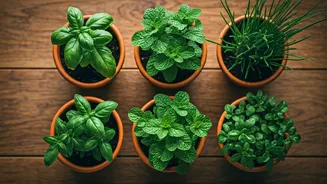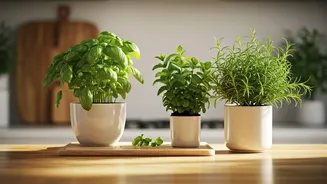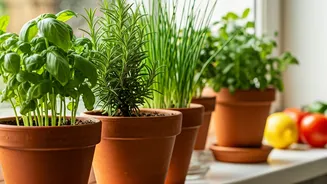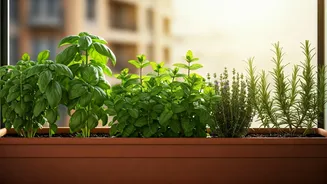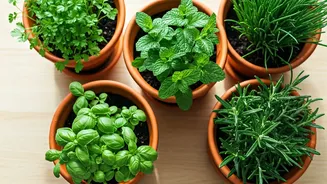




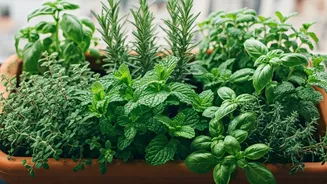
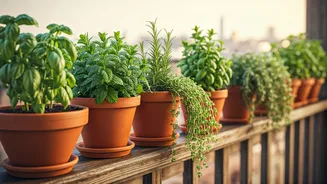


First, Your Simple Setup
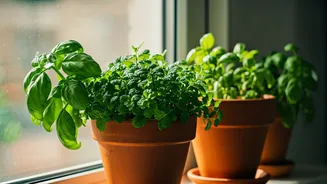
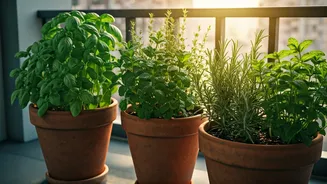
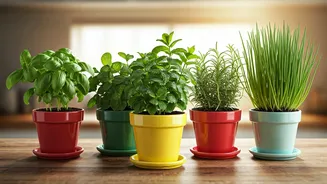
Before we get to the plants, let's talk basics. Success starts with the right foundation, but don't overthink it. You'll need five pots, each at least 6-8 inches in diameter, with drainage holes at the bottom—this is non-negotiable, as herbs hate sitting
in water. Grab a bag of all-purpose potting mix from any garden center. This soil is designed for containers and has the right balance of drainage and nutrients. Finally, find your sunniest spot. Most herbs need at least six hours of direct sunlight per day to thrive, making a south-facing window the prime location. If you lack natural light, a simple LED grow light can work wonders.
1. Basil: The Taste of Summer
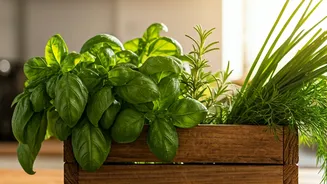
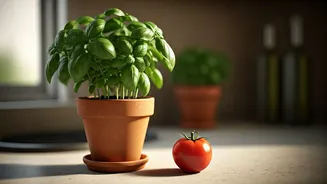
If you could only grow one herb, it might be basil. Its sweet, aromatic leaves are the soul of pesto, the perfect partner to tomatoes, and the key to elevating a simple pasta or pizza. Basil is a sun-worshipper that loves warmth and consistently moist (but not soggy) soil. The most important trick for a bushy, productive plant is to pinch off the top sets of leaves regularly. This encourages the plant to branch out, giving you more leaves to harvest. Whenever you see a flower bud forming, pinch it off immediately; once basil flowers, its leaf flavor begins to decline.
2. Mint: The Refreshment Hero
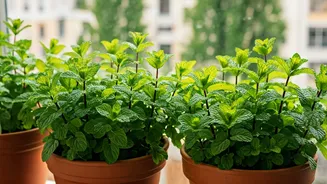
Whether for mojitos, iced tea, or a fresh garnish for fruit salad, mint is an absolute powerhouse of refreshment. It's famously easy to grow—so easy, in fact, that it can be aggressively invasive in a garden bed. This makes it the perfect candidate for a container, where its vigorous roots are safely contained. Mint isn't as fussy about sunlight as other herbs and can tolerate partial shade. Keep its soil moist, and trim it back often to encourage new, tender growth. One plant will quickly fill its pot, providing you with a nearly endless supply.
3. Chives: The Gentle Onion Kick
Chives are the unsung heroes of the herb world, providing a delicate onion flavor without the sharp bite. Snipped fresh, they are transformative for scrambled eggs, baked potatoes, soups, and creamy dips. As a member of the onion family, they are incredibly forgiving and one of the easiest herbs to grow indoors. They don't need as much direct sun as basil or rosemary and are happy with a few hours of good light. The best part? They're a “cut-and-come-again” plant. Use a pair of scissors to snip the leaves about an inch from the base, and they'll regrow in no time.
4. Parsley: The Everyday Finisher
Often dismissed as a mere garnish, fresh parsley is a culinary workhorse. Its bright, clean flavor cuts through richness and adds a finishing touch of freshness to almost any savory dish, from stews to salads. You'll generally find two types: curly and flat-leaf (Italian). While both are great, many chefs prefer flat-leaf parsley for its more robust flavor. Parsley enjoys morning sun but can appreciate a bit of afternoon shade, especially in hotter climates. It likes its soil to be consistently moist. Harvest the outer stalks first to allow the center of the plant to keep producing new growth.
5. Rosemary: The Hardy Aromatic
With its pine-like aroma and robust, woody flavor, rosemary is essential for roasting meats, potatoes, and vegetables. A single sprig can infuse an entire dish with its Mediterranean character. Native to sunny, dry climates, rosemary loves as much sun as you can give it and is very sensitive to overwatering. Let the soil dry out completely between waterings. Unlike the other herbs on this list, rosemary is a woody shrub that can live for years. Start with a small plant from a nursery, as it can be tricky to grow from seed. A single pot will provide fragrant sprigs for countless meals.