



The Trend is Curves
If you’ve browsed any design magazine or social media feed lately, you’ve likely noticed it: a distinct softening of the landscape. The sharp, rigid lines and boxy minimalism that dominated interior design for the past decade are giving way to something
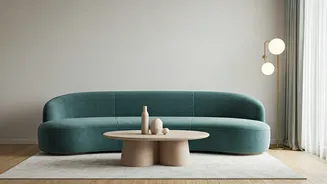
gentler. The trend is an embrace of all things curved. We’re talking voluptuous, kidney-bean-shaped sofas, circular coffee tables, arched doorways, and round, oversized mirrors. It’s a design movement that favors organic shapes over geometric precision, pulling inspiration from the Art Deco glamour of the 1920s and the biomorphic forms of the 1970s. This isn’t just a fleeting fancy; it’s a direct response to our desire for homes that feel like sanctuaries—soft, comforting, and welcoming. And for those of us living in apartments, condos, or tiny homes, it’s also a powerful design tool.
The Psychology of Soft Edges
So, why do curves work so well in compact spaces? The magic lies in a bit of visual psychology. Our eyes—and our bodies—navigate a room with curves differently than one with sharp angles. Hard corners create visual stops. They define the boundaries of a room, making you acutely aware of its limitations. A 90-degree angle on a sectional sofa can feel like a barricade, chopping up precious floor space and creating an awkward, unusable corner. Curves, on the other hand, encourage the eye to keep moving. A rounded sofa or a circular rug helps create a sense of flow, making a room feel more continuous and, therefore, more expansive. There are no harsh stops, just a gentle, sweeping line that guides your gaze around the space. This continuous movement tricks the brain into perceiving the room as larger and less confined. Soft edges feel inherently more approachable and less intimidating, contributing to an atmosphere of calm and relaxation—a priceless commodity in any home, but especially in one where space is at a premium.
How to Bring Curves Home
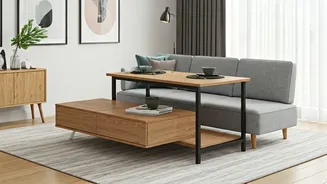
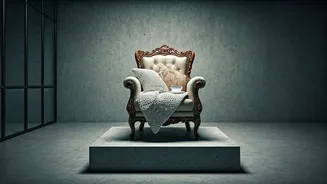
Adopting this trend doesn’t require you to trade all your belongings for bubble-shaped furniture. You can start small to great effect. One of the easiest entry points is a round mirror, which not only adds a soft shape but also reflects light and creates an illusion of depth. An arched floor lamp can introduce a graceful curve into a tight corner, drawing the eye upward. Ready for a bigger commitment? Swap your rectangular coffee table for a circular or oval one. It instantly improves traffic flow, eliminating the hip-bruising corners you have to navigate in a tight living room. When shopping for seating, consider an armchair with a rounded back or a sofa with sloped arms. These pieces offer the same comfort but with a smaller, less imposing visual footprint than their boxy counterparts. For a clever, budget-friendly trick, you can even paint an arch on a wall behind a console table or headboard to mimic a curved architectural feature without calling a contractor.
More Than Just Good Looks
The benefits of embracing curves extend beyond mere aesthetics. There’s a practical side, too. In high-traffic areas like entryways or the path between the sofa and the TV, furniture with rounded edges is simply easier to move around. It creates natural, intuitive pathways for walking without forcing you to make sharp turns. This is especially beneficial in open-concept studio apartments where a single piece of furniture might define the boundary between living and dining areas. Furthermore, curved furniture is often perceived as more social. A curved sofa, for instance, subtly angles people toward each other, facilitating conversation more naturally than a straight sofa where everyone sits in a line. And for families with small children, the safety aspect is undeniable. Fewer sharp corners mean fewer bumps, bruises, and worries for parents, making the home a safer and more playful environment.