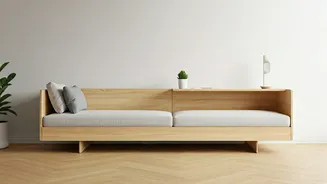




The Tetris Effect of City Living
If you live in a major U.S. city, you’re likely playing a constant, real-life game of Tetris with your belongings. That sectional sofa you loved in the showroom suddenly consumes your entire living room. The standing desk you bought for your work-from-home
setup means you can no longer open your closet door all the way. And the solution we’ve been sold for decades is to get more—more shelves, more under-bed storage bins, more decorative boxes to hide the clutter. This approach turns your home into a warehouse for your possessions, not a sanctuary for your life. Every square inch becomes dedicated to storage, and the visual noise of it all creates a subtle, persistent stress. We’re so focused on fitting everything in that we forget the goal: to create a space that feels open, calm, and functional. The problem isn’t that you have a life to fit into your apartment; it’s that you’re trying to solve a design problem with accumulation.
From More Stuff to Smarter Systems
The fundamental flaw in the “more stuff” approach is that it treats every item as a permanent, static object. Your dining table is always a dining table, even when you only eat at it once a week. Your bed is always a bed, consuming a hundred square feet of floor space 24/7. But what if your furniture could adapt to your needs throughout the day? This is the core idea behind smart, transformable design. It’s not about owning less, necessarily, but about making what you own work harder. It’s about investing in systems, not just objects. A single, high-quality piece that serves three functions is infinitely more valuable in a 600-square-foot apartment than three separate pieces that only do one thing.
The Rise of the Transformer
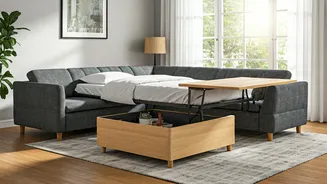
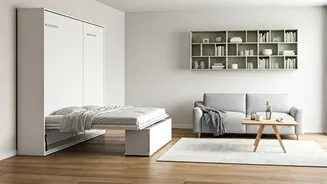
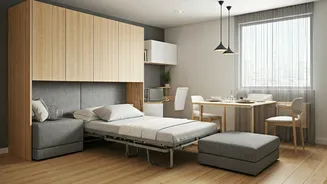
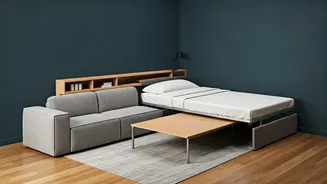
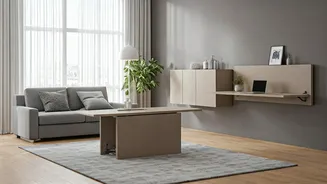
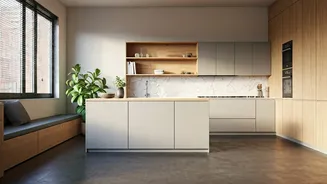
This is the hero category of smart furniture. These are the pieces that perform mechanical magic, changing form and function with an elegant pull, lift, or pivot. The most famous example is the modern Murphy bed, which has evolved far beyond a clunky box that folds out of a wall. Today’s versions seamlessly integrate a sofa, a desk, or shelving, so the space is just as functional when the bed is tucked away. Think bigger than just beds: there are coffee tables that rise and expand to become six-person dining tables, wall units where a TV stand swivels to reveal a home office, and kitchen islands that hide retractable seating. These pieces give you back your floor space, allowing a studio to feel like a one-bedroom.
Mastering the Art of Hidden Utility
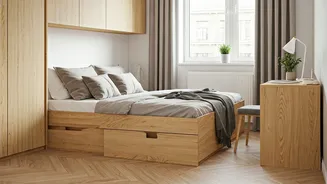
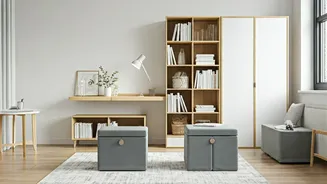
Not all smart furniture needs to be robotic. Some of the most effective pieces are masters of disguise. This is furniture that looks like one thing but serves a hidden secondary purpose. A stylish upholstered ottoman in the living room? It’s not just a footrest; its top lifts off to reveal cavernous storage for blankets, board games, or workout gear. That sleek, modern bed frame isn’t just holding up your mattress; it has a hydraulic lift mechanism that raises the entire mattress to expose a huge storage area underneath, perfect for out-of-season clothes or luggage. A simple entryway bench offers a place to put on your shoes while its seat flips up to hide them away. These pieces fight clutter by giving it a designated, invisible home.
Thinking Vertically, Not Just Horizontally
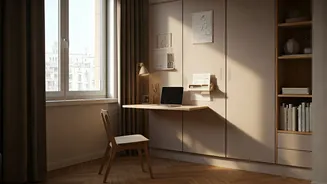
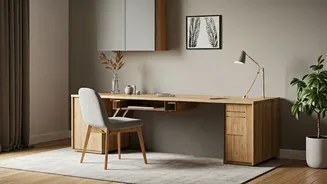
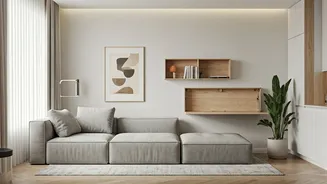
When floor space is at a premium, the only way to go is up. Smart vertical design goes beyond just putting up a few shelves. It’s about integrated systems that use wall space to its full potential. Look for modular shelving that can be configured around a doorway or window, combining open shelves for books with closed cabinets for less sightly items. Wall-mounted desks can fold up to become nearly flush with the wall, giving you back a clear walkway when you’re not working. In kids’ rooms or spaces for roommates, a well-designed loft bed doesn’t just add another sleeping area; it creates a whole new functional zone underneath for a desk, a reading nook, or storage, effectively doubling the utility of that corner of the room.