




More Than Just a Pretty View
We often think of a weekend in nature as a simple 'reset'—a chance to disconnect from work and email. But something much deeper is happening in our brains. According to Attention Restoration Theory, a concept developed by environmental psychologists Rachel
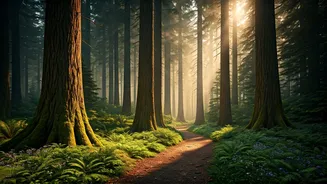
and Stephen Kaplan, natural environments do more than just relax us; they actively restore our ability to focus. Unlike a busy city street that constantly demands our 'directed attention' to avoid traffic and navigate crowds, a forest or a coastline engages us effortlessly. This 'soft fascination' allows our minds to wander, to reflect, and to recharge the cognitive batteries we exhaust during the workweek. That feeling of mental clarity you get after a hike isn't just your imagination; it’s your brain’s processing power being returned to its factory settings. This refreshed mental state is the perfect canvas for creating new, vivid memories.
The Transformative Power of Awe
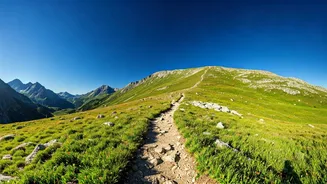
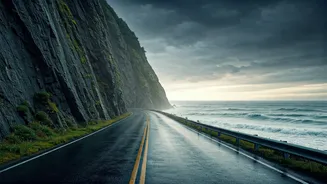
A key ingredient in turning an experience into a lasting story is the emotion of awe. It’s that feeling you get when you stand at the edge of the Grand Canyon, look up at a star-filled sky, or watch a storm roll in over the ocean. Researchers like Dacher Keltner at UC Berkeley have found that awe has profound effects on us. It makes us feel connected to something larger than ourselves, promotes generosity, and even seems to slow down our perception of time, making the moment feel richer and more significant. Green landscapes are factories of awe. A towering redwood, a silent, misty lake at dawn, or a panoramic mountain vista provides a scale and grandeur that our everyday lives lack. These moments punctuate our experience, giving our future stories their dramatic peaks. A trip might be just 48 hours, but a single moment of awe can make it feel epic.
A Break from the Algorithm
Our daily lives are increasingly curated and predictable. We follow optimized routes to work, get algorithm-based recommendations for dinner, and scroll through feeds designed to show us more of what we already like. Nature is the ultimate antidote to the algorithm. It is inherently unpredictable. You can’t script the deer that crosses your path, the sudden sun shower that creates a rainbow, or the specific way the light filters through the leaves. This unpredictability and sensory richness—the smell of pine, the crunch of leaves, the chill of a breeze—provide the raw, specific details that make a story compelling. When we recount a trip, we don't just say, 'We went hiking.' We say, 'Remember when that massive hawk swooped down right over our heads?' These unplannable, novel moments are the building blocks of narrative. They are the plot twists in the story of our weekend.
From Experience to Narrative
Ultimately, a 'story' is more than just a sequence of events. It’s an interpretation—a narrative we construct that gives an experience meaning. A short break in a green landscape provides all the necessary ingredients. It gives you a clear beginning (leaving the city), a middle filled with sensory details and moments of awe, and an end (the reluctant return, feeling changed). Because the experience is so different from your routine, it’s easier to isolate and shape into a coherent narrative. You’re not just telling people what you did; you’re sharing a small transformation. You left tired and distracted, and you came back clear-headed and with a story about that one perfect sunset. This act of telling and retelling cements the trip in your memory, elevating it from a simple weekend away to a chapter in your personal storybook.