





Why Bother Pruning Before the Storms?
Think of a large, leafy tree in high wind as a giant sail. A dense, unpruned canopy catches the wind, putting immense stress on the trunk and branches. When that wind is paired with the torrential downpours of a monsoon, the weight of the waterlogged
leaves adds even more strain. This combination is a recipe for disaster, leading to snapped limbs, uprooted trees, and significant damage not only to the plant itself but potentially to your roof, your car, or your neighbor's fence. Preventative pruning isn't about controlling a plant’s size as much as it is about improving its structure and safety. By strategically thinning the canopy, you allow wind to pass through the tree rather than pushing against it. This simple act drastically reduces the risk of breakage. It’s an investment of a few hours that can save you from days of messy, expensive, and heartbreaking cleanup. It’s the difference between watching the storm with a cup of tea and watching it through your fingers, hoping that big branch over the driveway holds on.
The Golden Rule: Timing is Everything
When it comes to monsoon prep, timing is your most important tool. The goal is to get your plants ready before the season’s first major storm, which typically begins to ramp up in the American Southwest around late June or early July. Therefore, the ideal window for pre-monsoon pruning is in the late spring, from May to early June. Pruning during this period gives the plant enough time to heal its fresh cuts before the onslaught of summer heat and moisture, which can otherwise invite disease or pests. Pruning too early in the spring might stimulate a burst of new, weak growth that is particularly vulnerable to storm damage. Pruning too late—once the storms have already begun—is simply reactive cleanup, not prevention. Mark your calendar for late spring as the prime time to give your trees and large shrubs a structural check-up and a strategic trim.
What to Target: A Pruner's Checklist
Knowing what to cut is just as important as knowing when. Don’t just start hacking away; a bad pruning job can be worse than no pruning at all. Focus your attention on these key targets: * **The Three D’s:** Start with the most obvious culprits—any branches that are Dead, Damaged, or Diseased. These are weak points that are almost guaranteed to fail in a storm. * **Crossing and Rubbing Branches:** Look for branches that are growing into each other. The constant friction creates wounds and weak spots. Remove the smaller or less well-placed of the two. * **Thinning the Canopy:** This is the most critical step for wind resistance. Selectively remove entire branches to open up the structure of the plant. Your goal is to be able to see daylight through the canopy. Avoid the common mistake of “topping”—indiscriminately shearing off the top of a tree. This encourages a cluster of weak, fast-growing shoots and ruins the tree's natural form. * **Low-Hanging Limbs:** Trim any branches that are getting too close to your house, roof, or power lines. A little clearance can prevent a lot of damage.
How to Make a Clean Cut
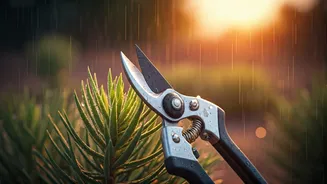
Proper technique ensures the plant heals quickly and correctly. First, always use sharp, clean tools—bypass pruners for small stems, loppers for medium branches, and a pruning saw for anything larger than an inch in diameter. Disinfect your blades with rubbing alcohol between plants to avoid spreading disease. When removing a branch, don’t cut it flush with the trunk. You’ll notice a slightly swollen area where the branch meets the trunk, known as the branch collar. This area contains specialized cells that heal the wound. Make your cut just outside this collar, leaving it intact. Avoid leaving a long stub, which will decay and can become an entry point for pests and rot. For any large branches or trees that are near structures or power lines, don't hesitate to call a certified arborist. They have the training, equipment, and insurance to do the job safely and effectively. It’s a wise investment in your property’s safety and the long-term health of your trees.