








The Thirst Before the Storm
Imagine an island in the final days of the dry season. The air is thick with a hazy, humid stillness. Dust coats the leaves of hardy plants, and the earth is a palette of sun-baked browns and yellows. The landscape feels tired, holding its breath and waiting.
Rivers have slowed to a crawl, and the roar of waterfalls has been replaced by a quiet trickle. This is the moment of anticipation, the quiet tension before the great performance begins. The humidity builds, the sky darkens at the edges, and a unique, electric charge fills the air. Everything is waiting for release.
A World Washed Clean
Then, it happens. The first fat drops of rain hit the dusty ground, releasing that intoxicatingly earthy scent known as petrichor—the smell of the earth breathing a sigh of relief. What begins as a sprinkle quickly becomes a downpour, a relentless, cleansing torrent. This isn't a gentle shower; it's a force of nature that washes the world clean. The weeks of accumulated dust are swept from every leaf, revealing a deep, waxy green that was hidden underneath. The air, once thick with haze, becomes astonishingly clear. Colors seem to snap back into focus, as if a saturation filter has been applied to reality itself. The world feels, and is, profoundly fresh.
The Green Explosion
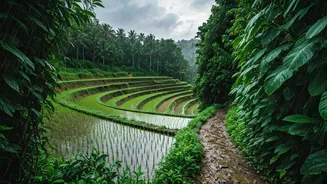
The true magic of the monsoon unfolds in the days and weeks that follow the first rains. The sudden abundance of water triggers an explosion of life. Landscapes that were parched and dormant erupt in a riot of green. Hillsides that were tan and bare are suddenly carpeted in a lush, almost fluorescent velvet. Dormant seeds, waiting patiently in the soil, burst forth with astonishing speed. This isn't the slow, gentle greening of a temperate spring; it's a rapid, dramatic transformation. In places like Bali or the coast of Thailand, rice paddies become impossibly vibrant, their terraced slopes reflecting the dramatic, cloud-filled skies.
Waterfalls in Full Voice
If the green explosion is the visual heart of the monsoon, the revival of the waterways is its soul-stirring soundtrack. The drama of the season is most apparent in the transformation of its rivers and waterfalls. A sleepy stream becomes a powerful, churning river. A rock face that was merely damp a month prior is now the backdrop for a thundering cascade, sending plumes of mist into the air. In places like Sri Lanka or India’s Western Ghats, visiting a waterfall during the monsoon is a multi-sensory experience—the deafening roar, the cool spray on your skin, and the sheer visual power of millions of gallons of water carving their way through the landscape. The sky, too, puts on a show, with dramatic cloud formations, spectacular sunsets, and the occasional flash of lightning illuminating the scene.
The Rhythm of Renewal
While tourists might flee, local life often adapts and even embraces the rhythm of the rains. The monsoon is not an inconvenience; it's the foundation of the agricultural calendar, the guarantor of life for the coming year. It dictates a different pace—a time for indoor gatherings, for enjoying the cool air, and for watching the spectacle of the storm from a sheltered veranda. For the traveler willing to embrace a bit of rain, this “off-season” offers a chance to see a destination at its most authentic and alive. It means fewer crowds, lower prices, and an opportunity to witness a powerful natural cycle that many visitors miss entirely.