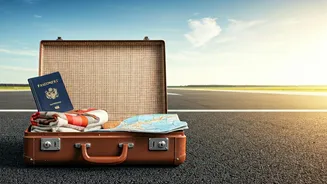







Understanding the ‘Travel Monsoon’
If you’ve traveled recently, you’ve likely felt the shift. It’s not just your imagination; the entire system is under stress. This is the ‘travel monsoon’—a perfect storm of factors making smooth journeys the exception rather than the rule. First, extreme
weather events, supercharged by climate change, are no longer freak occurrences. Wildfires, floods, and record-breaking heatwaves now routinely ground flights and force evacuations in peak tourist seasons. Second, the travel industry is still recovering from the pandemic. Airlines and airports face persistent staffing shortages, leading to a domino effect of cancellations and delays for even minor operational hiccups. Finally, a surge in ‘revenge travel’ has led to over-tourism at popular destinations, straining infrastructure and making on-the-ground logistics incredibly challenging. Hoping for the best isn’t a strategy anymore; preparedness is.
Embracing the Plan B Mindset
Adopting a Plan B mindset isn’t about pessimism. It’s about empowerment. It’s the crucial mental shift from treating your itinerary as a fragile, sacred document to viewing it as a flexible blueprint. The goal is to reduce the stress and helplessness that come with disruption by having built-in alternatives. The empowered Plan B traveler thinks, “Okay, the flight to Lisbon is canceled. What’s my move?” instead of, “My vacation is ruined.” This proactive approach transforms a potential disaster into a logistical puzzle you’re equipped to solve. It means accepting that your initial plan is just one of several great possibilities. This flexibility doesn't kill the magic of travel; it protects it by ensuring that your precious time off is spent enjoying an adventure, even if it’s not the exact one you first envisioned.
Skill 1: Master the ‘Almost’ Destination
The most advanced Plan B skill is having a backup trip already in mind. This goes beyond booking a different hotel; it’s about identifying a secondary destination or region you’d be equally excited to visit. For example, if your dream trip is to the Greek islands in August, your Plan B could be the less-crowded, equally beautiful Albanian Riviera. If Napa Valley is threatened by wildfires, you could have a backup plan to explore the wineries of Oregon’s Willamette Valley. This strategy works best when the backup is geographically or logistically feasible to pivot to. Before your main trip, do a little research. What flights are available? What are some hotel options? Having this 'trip-in-your-pocket' turns a cancellation from a dead end into a simple course correction. You’re not starting from scratch; you’re just activating the alternate plan.
Skill 2: Build a Resilient Itinerary
Your booking habits are your first line of defense. A resilient itinerary is one that anticipates friction. First, kill the tight connection. In today’s climate, a 45-minute layover is a gamble you’ll likely lose. Opt for layovers of two hours or more, especially in notoriously busy hub airports. Second, become obsessed with cancellation policies. Pay the extra few dollars for a refundable hotel room or car rental. Use booking platforms that have clear and generous flexibility filters. Read the fine print *before* you click ‘purchase.’ Finally, consider using a human travel advisor. In an era of chaos, their real value isn't just finding deals; it's troubleshooting. When things go wrong, they are the ones on hold with the airline for hours while you’re already on your way to the backup hotel they just booked for you.
Skill 3: Pack a Digital and Physical Go-Bag
When a disruption hits, speed is everything. Your ‘go-bag’ contains everything you need to pivot quickly. Digitally, this means having all your travel apps organized on your phone's home screen. This includes your airline app, hotel booking apps (like HotelTonight for last-minute stays), and a flight-tracking app like FlightAware. Have screenshots of all confirmations, passport photos, and tickets saved in an offline folder in case you lose cell service. Physically, your carry-on is your lifeline. It should contain not just a change of clothes but also prescription medications for several extra days, a portable power bank, and copies of important documents. Never check anything you can’t live without for 48 hours. The goal is to be fully self-sufficient and able to rebook your entire trip from an airport chair at 2 a.m. if necessary.
Skill 4: Understand Your Rights and Insurance
Being a savvy traveler means knowing what you’re owed. For domestic flights in the U.S., the Department of Transportation (DOT) has a customer service dashboard that clearly outlines what each airline will provide for controllable cancellations or delays (like meals or hotel vouchers). Bookmark it. More importantly, understand your travel insurance. Basic policies often don't cover much beyond trip interruption for very specific, documented reasons. For true peace of mind, the gold standard is a “Cancel For Any Reason” (CFAR) policy. It’s more expensive, but it allows you to cancel your trip for *any* reason—including simply not wanting to go anymore—and recoup a significant portion (usually 75%) of your non-refundable costs. In the age of the travel monsoon, viewing CFAR insurance not as an expense but as an investment in flexibility is a core Plan B skill.