


From 'Eco-Anxiety' to Action
For many Americans, the desire to live more sustainably is met with a wall of overwhelming choices and alarming headlines. Solar panels, electric vehicles, and ethically sourced everything can feel financially or logistically out of reach. This gap between
intention and action can create 'eco-anxiety,' a chronic stress about the planet's future. Home composting cuts through that paralysis. It’s a direct, physical, and cyclical process you control. Instead of tossing food scraps into a bin destined for a landfill, you are actively diverting waste and creating something valuable. This simple ritual transforms an abstract global problem into a manageable, personal, and deeply satisfying solution.
What Happens in the Bin?
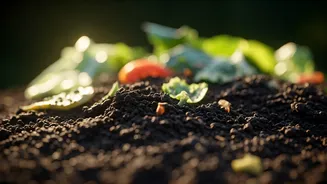
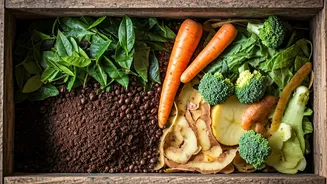
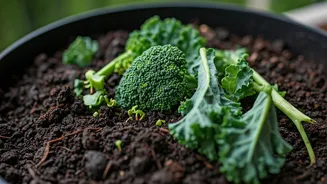
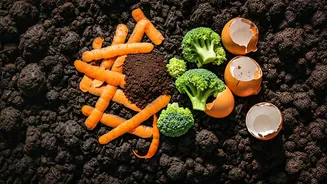
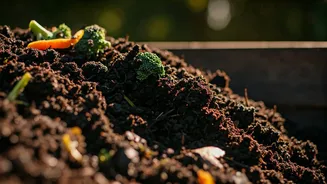
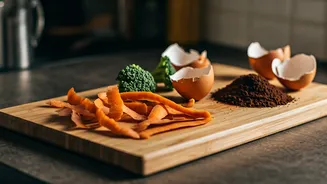
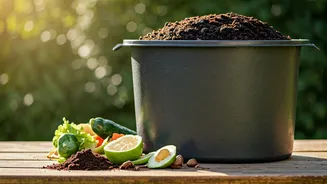
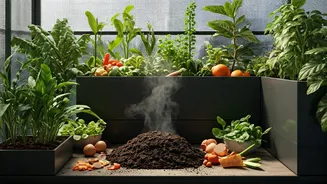
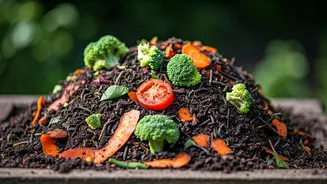
At its core, composting is nature’s recycling program, and you’re just giving it a dedicated space to work. When you combine your kitchen and yard waste, you’re providing a feast for a microscopic army of bacteria, fungi, and other decomposers. They break down organic material—think fruit peels, vegetable ends, eggshells, coffee grounds, and dry leaves—into a dark, crumbly, nutrient-rich soil amendment known as humus, or more simply, compost. This process requires a balance of 'greens' (nitrogen-rich materials like food scraps and grass clippings) and 'browns' (carbon-rich materials like dry leaves, cardboard, and twigs). With the right mix, plus a little moisture and air, nature does the heavy lifting.
The Practical Payoffs
The feeling of doing good is powerful, but composting delivers concrete benefits. First, you’ll significantly reduce your household trash. The U.S. Environmental Protection Agency estimates that food scraps and yard waste make up more than 30% of what we throw away. By composting, you keep that material out of landfills, where it would otherwise decompose without oxygen and release methane, a potent greenhouse gas. Second, you get a free, high-quality soil conditioner. Known as 'black gold' by gardeners, compost improves soil structure, helps it retain moisture (reducing your watering needs), and provides essential nutrients for houseplants, vegetable gardens, or your lawn. You’re literally turning trash into treasure.
How to Start, Simply
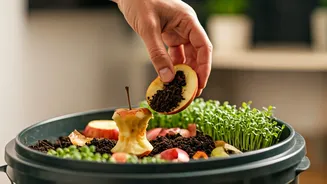
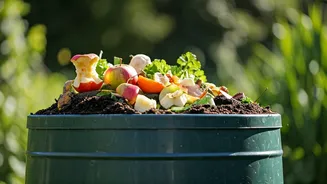
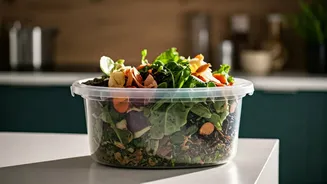
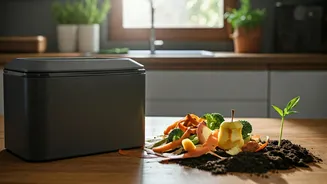
Getting started doesn't require a huge yard or expensive equipment. You can begin with a simple countertop pail for kitchen scraps and a designated spot outside. Your main options are a stationary bin, a rotating tumbler (which speeds up the process), or a simple open pile. For apartment dwellers, vermicomposting (using worms in a specialized bin) is an excellent indoor, odor-free option. The basic recipe is simple: aim for roughly two to three parts 'browns' for every one part 'greens.' Keep the pile as damp as a wrung-out sponge, and turn it every week or two with a pitchfork or shovel to aerate it. What stays out is as important as what goes in: avoid meat, dairy, and oily foods, as they can attract pests and create odors.
Common Worries, Solved
Two fears often stop people from starting: smell and pests. A properly managed compost pile shouldn't stink. If it does, the diagnosis is almost always too much nitrogen ('greens') and not enough carbon ('browns'). The fix is easy: add more dry leaves, shredded newspaper, or cardboard to balance the mixture and absorb excess moisture. A foul smell means your pile is anaerobic (lacking oxygen), so turning it will also help. As for pests, a container with a secure lid is your best defense. Burying your food scraps in the center of the pile, rather than leaving them exposed on top, will also make your compost far less interesting to critters like raccoons or rodents.