







First, What Is a Panchang?
For many Indian-American families, planning a major event—from a housewarming to a wedding—isn’t just about finding a free Saturday. It’s about finding an auspicious time. This is where the Panchang comes in. Think of it as the traditional Hindu astrological
calendar, a complex system that goes far beyond the Gregorian calendar's simple days and months. The Panchang tracks five key astronomical elements: the lunar day (Tithi), the weekday (Var), the constellation (Nakshatra), the lunar phase (Yoga), and the half-lunar day (Karana). Together, these elements are used to determine favorable moments, or 'muhurtas,' for important life events. For generations, families have consulted a trusted paper Panchang, often a booklet from a local temple or a specific publisher, to guide their planning.
The Old Way: Paper, Phone Calls, and Confusion
The traditional paper Panchang, while deeply respected, was designed for a different era. Its limitations become glaringly obvious in our modern, globally connected world. First, it’s a physical object. Who has the 'official' copy? Is it the one Grandma has in Houston or the one your aunt uses in San Jose? Second, interpreting it can require expertise. Finding a 'good day' often involved a call to an elder or a priest, who would manually cross-reference dates and times. Trying to explain a 'tithi' to a cousin who only uses Google Calendar can lead to hilarious misunderstandings and scheduling chaos. This process turns what should be a joyful planning experience into a logistical headache, especially when coordinating across multiple households and time zones.
The 'Smart Cloud' Upgrade
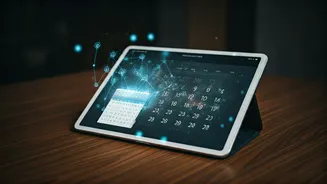
Enter the smart cloud panchang. These are not just digital copies of a paper calendar; they are dynamic, interactive tools designed for modern life. Available as apps and websites, they take all the complex astrological data of a traditional Panchang and integrate it with the features we expect from digital calendars. The 'cloud' aspect is key: it means the information is synced and accessible to everyone you invite. No more arguments over which calendar is correct. Everyone is looking at the same data, updated in real-time, on their phone, tablet, or computer. These apps automatically adjust for location and time zones, a game-changer for families spread across the country or the world. A favorable time calculated for New York is automatically displayed correctly for someone in California.
Find the Perfect 'Muhurta' in Seconds
The real magic of a digital panchang is its ability to simplify the search for auspicious moments. Instead of manually flipping through pages and deciphering complex charts, you can use a simple search function. Want to find the best dates for a baby shower next month? Just select the event type, input your preferred date range, and the app will generate a list of auspicious 'muhurtas.' Many apps provide detailed explanations for why a certain time is favorable, showing the specific alignment of tithi, nakshatra, and other elements. This demystifies the process, making it accessible even to younger generations or family members less familiar with the tradition. It turns the esoteric into the practical, allowing you to honor the 'why' without getting bogged down in the 'how.'
Uniting Generations Through Tech
Perhaps the greatest benefit is how these tools bridge generational and cultural gaps. An elder can feel assured that traditions are being respected, while younger, tech-savvy family members get a streamlined, efficient planning tool that works like the other apps they use every day. Sharing a potential event through a digital panchang is as easy as sending a calendar invite. Everyone can see the proposed auspicious time and RSVP directly. It fosters collaboration instead of confusion. This shared digital space becomes a new kind of family hub, a place where tradition is not just preserved but actively practiced in a way that fits a 21st-century lifestyle. It respects the past while embracing the future, ensuring cultural practices continue to be a source of connection, not conflict.