





What You're Actually Seeing
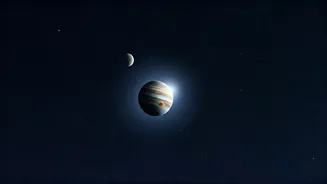
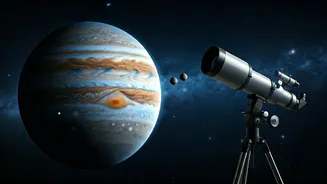
A 'transit' is an astronomical event where one object passes in front of another. When we talk about Jupiter, we’re almost always referring to its four largest moons—Io, Europa, Ganymede, and Callisto—discovered by Galileo in 1610. A moon transit happens
when one of these moons passes directly in front of Jupiter from our point of view on Earth. But the real magic happens during a 'shadow transit.' This is when you can see the tiny, black-dot shadow of that moon projected onto Jupiter’s cloudy surface, trailing or leading the moon itself. It’s a stunningly direct way to see the three-dimensional nature of our solar system in real time. You’re not just seeing a dot of light; you're seeing a world cast a shadow on another world hundreds of millions of miles away.
The Right Gear (It's Simpler Than You Think)
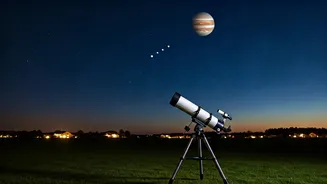
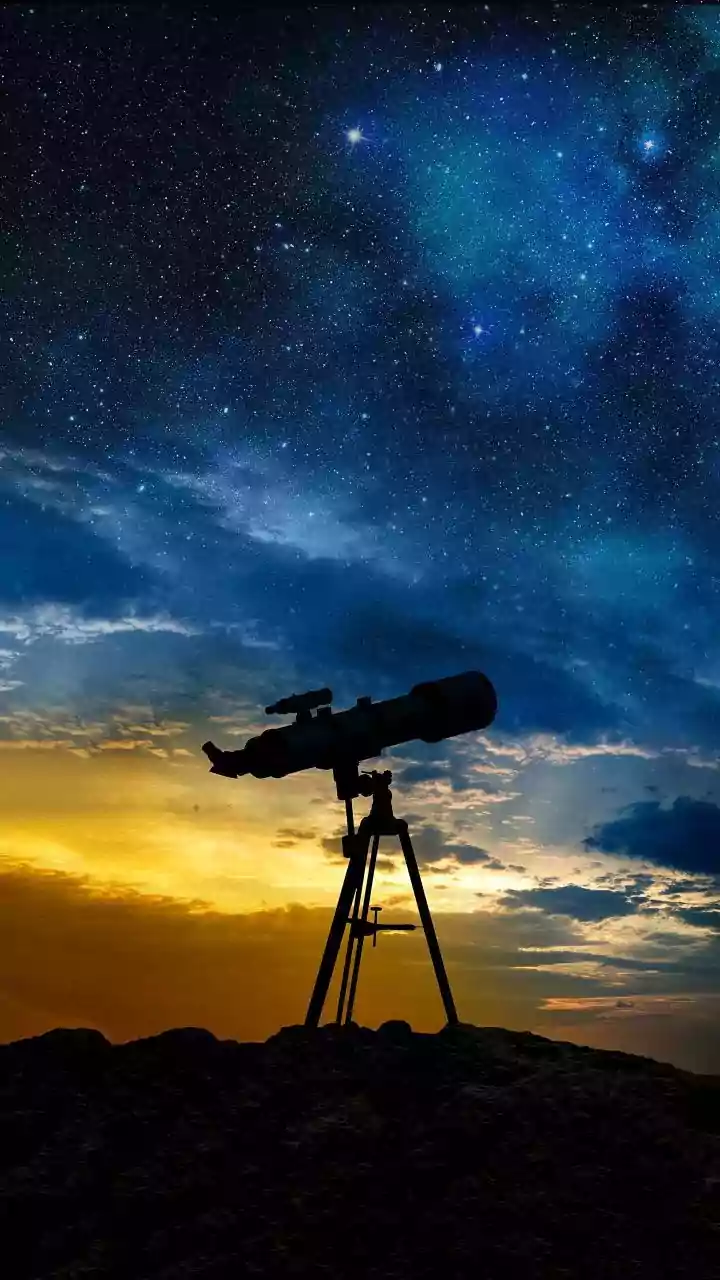
The phrase 'backyard telescope' can be intimidating, but the barrier to entry for this celestial show is lower than you might imagine. While you can spot the four Galilean moons as tiny pinpricks of light with good binoculars, you'll need a telescope to resolve the transits. A 4-inch refractor telescope or a 6-inch reflector telescope is more than enough to get the job done. These are common, relatively affordable models often recommended for beginners. More important than sheer size is a sturdy mount to prevent shaking and good optical quality. For magnification, you’ll want to be in the 100x to 150x range. This provides a view that’s powerful enough to see the shadow as a distinct black dot, but not so magnified that the Earth's atmospheric turbulence ruins the image.
First, Find the Giant
Before you can see the moons, you have to find Jupiter. Luckily, it’s the easiest part of the whole process. As the fourth-brightest object in the sky after the Sun, Moon, and Venus, Jupiter is almost impossible to miss when it’s visible. It shines with a brilliant, steady, yellowish-white light and doesn't twinkle like a star. To find out when and where Jupiter is in your night sky, use a simple astronomy app on your phone (like Stellarium, SkyView, or Star Walk) or check a website like TheSkyLive.com. These tools will show you exactly where to point your telescope. Once you have it in your eyepiece, even at low power, you’ll immediately see the planet as a distinct disc, likely flanked by its four bright moons in a nearly straight line.
Timing Is Everything: Your Secret Weapon
You can’t just look at Jupiter on any given night and expect to see a transit. These events happen frequently, but they follow a precise cosmic schedule. This is where you need an ephemeris—a fancy word for a table of astronomical data. Don't worry, you don’t need to calculate it yourself. The best resource for amateurs is Sky & Telescope magazine's online transit calculator. Simply enter the current date, and it will generate a list of all the upcoming transits and shadow transits for the Galilean moons, timed to the minute for your specific time zone. It will tell you, for example, that Io’s shadow will begin its transit at 10:47 PM and finish at 12:59 AM. Having this schedule is the single most important step to successfully seeing a transit.
The Art of Patient Observing
Once you have your telescope aimed and your transit times ready, the final piece is patience. First, give your eyes at least 10-15 minutes to fully adapt to the dark; avoid looking at your bright phone screen. When you look in the eyepiece, focus carefully on Jupiter’s disc. The shadow will appear as a tiny, perfectly black, and perfectly round speck. It can be surprisingly difficult to spot at first, especially if it’s near the planet's edge or over one of Jupiter's darker cloud belts. The key is to look for movement. Over the course of 15 to 20 minutes, you will be able to detect the shadow's slow but steady march across the planet's face. This is the payoff—the moment you see that little black dot move, you are directly observing the orbital mechanics of another world.