




A Kingdom in the Clouds
Tucked away in the northern Indian state of Himachal Pradesh, Spiti Valley is a high-altitude cold desert pressed against the border of Tibet. Often called “Little Tibet,” its culture, landscape, and Buddhist traditions are profoundly linked to its neighbor.
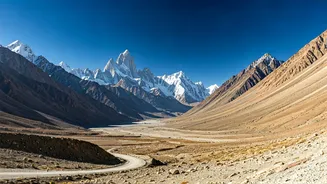
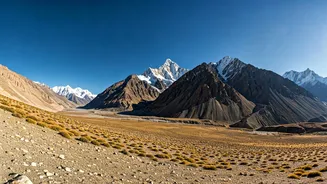
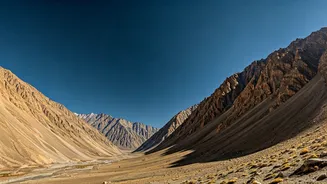
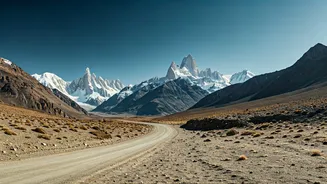
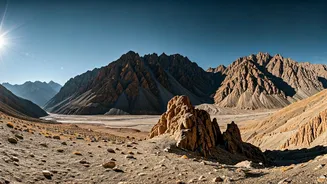
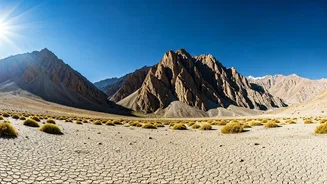
For most of the year, this is a world of stark, raw beauty—a moonscape of grey and brown rock under an impossibly vast blue sky. It’s a place of silence, immense scale, and deep spirituality, where villages are small clusters of whitewashed mud-brick homes and life moves at the pace of the seasons. Cut off by heavy snow for nearly half the year, Spiti has remained one of the most isolated and well-preserved regions in the Himalayas, a destination for adventurers, pilgrims, and those seeking refuge from the noise of the modern world.
The Monsoon's Beautiful Lie
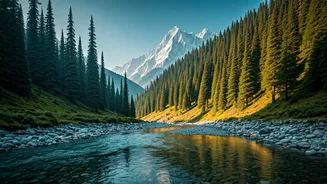
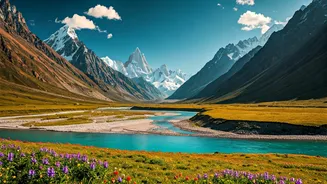
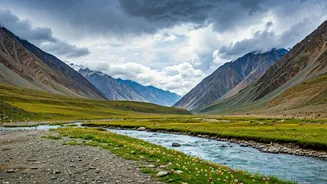
The headline’s phrase “when India turns wet” conjures images of torrential downpours. But here lies Spiti’s great secret. The valley is located in a rain-shadow region, meaning the towering Himalayan peaks block the majority of the monsoon clouds that drench the rest of the subcontinent from June to September. While southern India is grappling with floods, Spiti remains overwhelmingly sunny and dry. The “wetness” is indirect and far more magical. The slightly higher temperatures of summer melt the winter’s heavy snowpack, sending life-giving water cascading down the mountainsides. This meltwater swells the Spiti River into a rushing torrent of vibrant turquoise and feeds the valley floor, creating a brief but spectacular explosion of life. It’s a season of transformation, not saturation.
A Palette of Earth and Sky
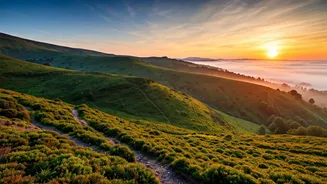
The “unreal” quality of Spiti in summer comes from its intense contrasts. The barren, ochre-colored mountains, which look almost Martian for much of the year, are suddenly streaked with patches of brilliant green. Local farmers use the glacial meltwater to cultivate fields of barley and green peas, creating geometric patterns of life against the desolate rock. Wildflowers erupt across the alpine meadows, carpeting patches of the valley in yellow, pink, and purple. The sky, cleared of the dust that haze brings in other seasons, is a piercing, crystalline blue, populated by dramatic, fast-moving white clouds that cast shifting shadows on the landscape below. This interplay of light and color—the deep turquoise of the river against the brown mountains and green fields—is what gives Spiti its dreamlike, painterly appearance during these months.
Monasteries Suspended in Time
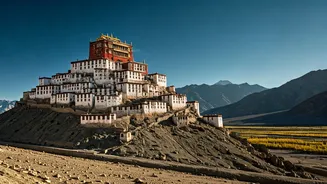
Spiti’s soul is found in its ancient Buddhist monasteries, or gompas, some of which are over a thousand years old. Perched precariously on cliffsides or crowning hilltops, these spiritual centers seem to float between earth and sky. During the summer, visiting them becomes an even more profound experience. The dramatic cloud-play and the sharp, clear light make structures like Key Gompa—a fortified monastery resembling a castle from a fantasy epic—appear even more mystical. At Tabo Monastery, known for its priceless ancient murals, the quiet courtyards feel like a true sanctuary from the world outside. The moody atmosphere of the season, with its fleeting shadows and brilliant bursts of sun, highlights the timeless, enduring nature of these sacred spaces.
The Journey Is the Destination
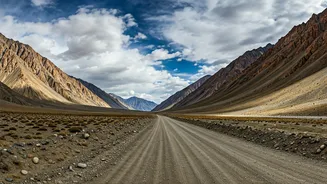
Getting to Spiti is an adventure in itself, and the monsoon season makes the journey all the more epic. The two main routes—one from Shimla along the treacherous Hindustan-Tibet Highway, and the other from Manali over the high passes of Rohtang and Kunzum La—are notoriously challenging. While Spiti itself is dry, its access roads are exposed to the full force of the monsoon’s early effects, with landslides and water crossings being common. Yet for travelers, this is part of the appeal. The drive is a slow, humbling immersion into the sheer power and scale of the Himalayas. It’s a rite of passage that strips away the trivial, ensuring that those who do arrive in the valley do so with a deep sense of accomplishment and a profound appreciation for the raw beauty they are about to witness.