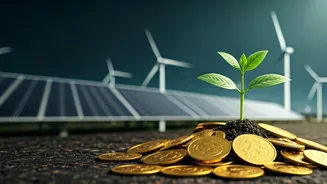









Investing as a Form of Activism
For many Millennials and members of Gen Z, the fight against climate change is the defining issue of their lifetime. They’ve grown up with dire warnings about rising sea levels and extreme weather, and this awareness shapes their consumer behavior, their career
choices, and now, their investment strategies. While previous generations may have seen investing primarily as a path to personal wealth, younger Americans increasingly view it as an extension of their values. Putting money into a green energy mutual fund isn't just a financial decision; it's a statement. This approach, often called sustainable or impact investing, reframes the purpose of capital. Instead of passively accepting a market portfolio that might include fossil fuel companies or other industries they oppose, these investors are actively seeking to defund polluters and finance the transition to a sustainable economy. They understand that where money flows, corporate behavior follows. By pooling their capital into funds dedicated to solar, wind, and other renewable technologies, they are sending a powerful market signal that the future of energy is green, and they want to own a piece of it.
The Appeal of Accessibility and Diversification
It’s one thing to want to invest in clean energy; it’s another to know how. Most people don’t have the time or expertise to research individual solar panel manufacturers or wind turbine developers. This is where mutual funds become the perfect vehicle. A mutual fund pools money from many investors to purchase a diversified portfolio of stocks, bonds, or other assets. A 'green energy' mutual fund, specifically, does the legwork of identifying and investing in dozens or even hundreds of companies across the renewables sector. This offers two key advantages for a young investor. First, it provides instant diversification. Instead of betting your savings on the success of a single company, your risk is spread across an entire industry. Second, it dramatically lowers the barrier to entry. With a single purchase, often for a relatively small minimum investment, anyone can gain exposure to a professionally managed portfolio of clean energy leaders. This accessibility makes it possible for everyday people, not just Wall Street titans, to participate in what many see as the next great economic revolution.
Betting on Long-Term Growth
While the ethical component is a primary motivator, this trend is far from pure altruism. Younger investors are also making a pragmatic, long-term financial bet. They have a longer investment horizon than their parents or grandparents and are positioning their portfolios for the world of 2050, not 1990. From their perspective, industries reliant on finite resources and carbon-intensive processes carry significant long-term risk. Conversely, they see the clean energy sector as a story of undeniable growth. Global governments, including the U.S. through legislation like the Inflation Reduction Act, are pouring hundreds of billions of dollars into incentivizing the green transition. Technology is rapidly making renewables cheaper than fossil fuels. Public demand for corporate environmental responsibility is soaring. For an investor in their 20s or 30s, the conclusion is simple: the companies solving the world’s biggest problem are likely to be the most valuable companies of the future. Investing in them now isn’t just about feeling good; it’s about getting in on the ground floor of a massive, multi-decade structural shift in the global economy.
A Generation Demanding Transparency
Growing up in the digital age has hardwired younger generations to expect transparency. They use apps to track everything from their diet to their screen time, and they expect the same level of insight into their investments. This has fueled the rise of ESG (Environmental, Social, and Governance) investing, a framework used to evaluate a company's performance on non-financial metrics. While ESG ratings are imperfect and sometimes controversial, they represent an attempt to provide the very data that eco-conscious investors crave. They want to know if their money is supporting companies with a low carbon footprint, fair labor practices, and diverse leadership. Green energy funds, by their very nature, are designed to score highly on the 'E' in ESG. Fund managers are increasingly transparent about their holdings and their screening process, allowing investors to see exactly which companies they are supporting. This alignment between a demand for data-driven accountability and the clear mission of green energy funds creates a powerful and attractive combination for the modern young investor.