






Beyond the Surface
First, let's get one common misconception out of the way. Your hair isn’t just one solid fiber. Think of it like a rope, composed of multiple layers. The outer layer, called the cuticle, looks like overlapping shingles on a roof. Its job is to protect
the inner core. When your hair feels smooth and looks shiny, it’s because those shingles are lying flat and tight. The inner core, or cortex, is where the magic happens. It’s made up of long keratin protein chains and is responsible for your hair’s strength, elasticity, and color. Most of the 'strengthening' you hear about is really about protecting the cuticle so it can do its job, and maintaining the integrity of the cortex inside.
The Real Secret: It's All About the Bonds
Here's the part that most people miss. The cortex isn't just a bundle of proteins; it's a complex network held together by chemical bonds. These bonds are the true source of your hair's strength. There are three main types, but the ones to know are the disulfide bonds. These are permanent, powerful bonds that give your hair its fundamental structure and resilience. When a stylist talks about breaking down your hair to perm or relax it, they are chemically breaking and then reforming these exact bonds.
Think of them as the steel framework of a building. When they are intact, the structure is sound. When they break, the building weakens and becomes vulnerable to collapse. This is the real 'secret' behind hair strength: it’s not about slathering on a coating, but about preserving the powerful, internal bond structure that holds each strand together from the inside.
How We Damage Our Hair (Without Realizing It)
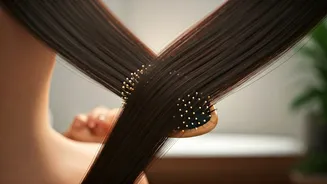
Everyday life is tough on hair bonds. Chemical services like bleaching, coloring, and relaxing are the most obvious culprits, as they are designed to chemically alter the hair's structure, breaking disulfide bonds in the process. But the damage doesn’t stop there. High heat from flat irons, curling wands, and even blow dryers can degrade the protein structure and weaken bonds. Even simple mechanical stress—like aggressively towel-drying, brushing wet hair too hard, or tight hairstyles—causes friction that lifts and chips away at the protective cuticle, exposing the vulnerable cortex to damage. Over time, these small insults add up, leading to a significant loss of bonds, which manifests as frizz, dullness, split ends, and breakage.
The Rise of Bond-Building Technology
For years, the best we could do for damaged hair was to temporarily patch it up with conditioning agents that smooth the cuticle. These products are helpful, but they work on the surface and wash away. The game changed with the introduction of bond-building technology. You’ve likely seen these products explode in popularity, and for good reason. Their active ingredients are engineered to do something revolutionary: instead of just coating the hair, they are small enough to penetrate the cuticle, reach the cortex, and actively repair broken disulfide bonds. They essentially work like molecular glue, finding the two ends of a broken bond and re-linking them. This restores some of the hair’s original strength and integrity from within, making it more resilient to future damage. It’s the closest science has come to actually 'healing' hair.
Simple Habits for Stronger Strands
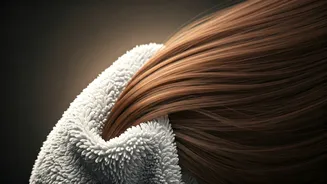
While bond-building treatments are powerful, you don't need a pricey product to start protecting your hair today. The secret is to create habits that preserve the bonds you already have. Start by washing your hair with lukewarm, not scalding hot, water to keep the cuticle from swelling excessively. Always apply a heat protectant before using hot tools; it creates a barrier between the heat and your hair. When your hair is wet and at its most fragile, gently squeeze out excess water with a soft t-shirt or microfiber towel instead of a rough terrycloth one. Finally, consider your hair's pH. A slightly acidic environment helps keep the cuticle sealed. You can achieve this with professional glosses or even a diluted apple cider vinegar rinse after conditioning to help those 'shingles' lie flat, locking in moisture and protecting the cortex.