





The Luxury of Nothing
In a world saturated with noise and crowds, the greatest luxury can be emptiness. The Andaman and Nicobar Islands, a remote Indian archipelago adrift in the Bay of Bengal, specialize in this particular brand of wealth. While hotspots around the globe
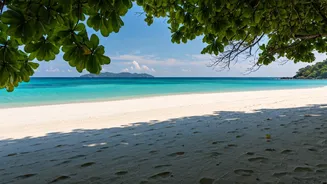
grapple with over-tourism, many of the Andamans’ most beautiful shorelines remain blissfully, almost surreally, tranquil. Forget the rows of rental umbrellas and the drone of jet skis. Here, the experience is defined by what’s absent: the hustle, the commercialism, the pressure to do anything at all. Arriving on a beach like Lalaji Bay on Long Island or the far stretches of Radhanagar Beach in the early morning, the quiet is so profound it feels like a presence in itself. It's a silence that allows you to hear the scuttling of a crab, the call of a distant sea eagle, and the gentle whisper of your own thoughts.
A Geography of Seclusion
This serene atmosphere isn’t an accident; it’s a product of geography and governance. Located over 800 miles from the Indian mainland, the Andamans are not a place one simply stumbles upon. Reaching them requires a commitment—a flight to Port Blair followed by a ferry ride to outer islands like Swaraj Dweep (formerly Havelock) or Shaheed Dweep (formerly Neil). This multi-step journey naturally filters the crowds. Furthermore, the Indian government has deliberately preserved the islands’ fragile ecosystem and protected the territories of indigenous tribes, restricting development and access to many of the 572 islands in the chain. The result is a travel experience that feels less like a manufactured resort vacation and more like a genuine expedition to a wild, untamed corner of the world. The emptiness is a form of conservation, preserving not just the environment but also a feeling of discovery that has become all too rare.
Where Jungle Meets Sea
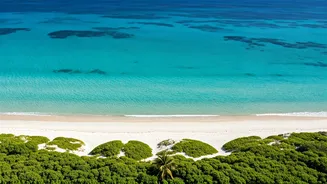
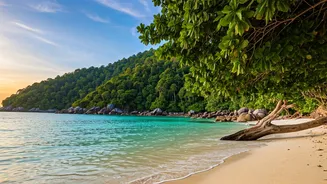
The “soft mood” of the Andamans is painted in two primary colors: the impossible turquoise of the water and the deep, mysterious green of the jungle. On many islands, ancient rainforests cascade down hillsides to meet the shore, their gnarled roots tangling in the sand. Towering Padauk and mangrove trees form a dense, emerald curtain behind the beach, creating a powerful sense of enclosure and intimacy with nature. At Radhanagar Beach, consistently ranked among the world's best, you can walk for a mile on powder-soft sand with a wall of primal forest on one side and the calm, clear Andaman Sea on the other. This constant, beautiful tension between land and sea means you are never just at the beach; you are at the edge of a wilderness. It’s an environment that encourages you to slow down, to notice the intricate patterns of a seashell or the way the light filters through the canopy.
Living on Island Time
On these islands, the clock gives way to the tide chart. The rhythm of life is slower, gentler, and dictated by the natural world. Days are marked by the rising sun, the shifting tides that reveal or conceal entire stretches of coastline, and the spectacular, fiery sunsets that locals and visitors gather to watch in reverent silence. There's a beautiful simplicity to it. Your agenda might consist of a morning swim, a nap in a hammock during the midday heat, and a barefoot walk along the shore as the moon rises. This deliberate lack of structured activity strips away the anxieties of modern life. It’s a forced digital detox in places with spotty Wi-Fi, compelling you to connect with your immediate surroundings instead of a distant feed. This is the essence of the Andamans’ softest mood: a gentle surrender to a slower, more elemental way of being.