



The Humidity Factor: A Paradise for Pathogens
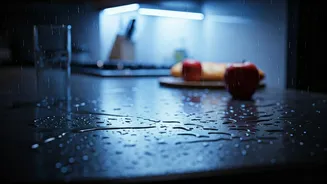
The most immediate change during rainy weather isn't just the water outside, but the moisture in the air. High humidity turns your kitchen into an ideal breeding ground for bacteria, mold, and yeast. These microbes thrive in damp environments, and what
feels like a slightly sticky countertop to you is a five-star resort for pathogens like Salmonella and E. coli. Moisture allows these germs to survive longer on surfaces and spread more easily. A damp dish towel, a cutting board that never quite air-dries, or even condensation on food packaging can become a source of cross-contamination. Bacteria that might have died off in a dry environment can now linger for hours, waiting to be transferred from a surface to your food, or from one food item to another. This is why thoroughly drying cutting boards, utensils, and countertops is even more critical when it's pouring outside. Don't let your kitchen's climate work against you.
Power Outages: The Refrigerator Risk Zone
Intense rain is often accompanied by thunderstorms, which are a leading cause of power outages. When your electricity goes out, the clock starts ticking on every perishable item in your refrigerator and freezer. According to the USDA, your refrigerator will keep food safe for only about four hours without power if the door remains closed. A full freezer will hold its temperature for approximately 48 hours (24 hours if half-full) if the door is unopened.
The key is to be prepared. Keep appliance thermometers in both your fridge and freezer to ensure they are at or below 40°F and 0°F, respectively. If an outage occurs, resist the urge to open the doors. Once power is restored, use the thermometer to check the temperature. Any perishable food—like meat, poultry, fish, eggs, and leftovers—that has been in temperatures above 40°F for two hours or more should be discarded. When in doubt, throw it out; it's not worth the risk.
Cross-Contamination from the Outside In
Rainy weather means you, your family, and even your grocery bags are tracking water into the house. This water isn't just pure H2O; it's a slurry of everything it has picked up from streets, yards, and sidewalks. Placing a wet reusable grocery bag on your kitchen counter can transfer unseen contaminants directly to your food prep surfaces. The same goes for wet shoes, umbrellas, and raincoats left near food areas.
In more extreme cases involving flooding, this risk becomes severe. Floodwater can contain sewage, agricultural runoff, and chemical waste. Any food that has come into contact with floodwater, including items in cans or sealed packages that aren't fully waterproof, should be considered unsafe. Canned goods might seem secure, but tiny punctures or compromised seals can let bacteria in. If your home experiences any level of flooding, be ruthless in discarding food that may have been exposed.
Keeping Outdoor Cooking Safe
A sudden downpour can send a barbecue or picnic scrambling indoors. In the rush to save the food from the rain, proper handling often gets forgotten. Burgers left half-cooked on the grill, potato salad sitting out, or serving utensils dropped on a wet patio can all become food safety hazards.
If you have to move the party inside, do it with hygiene in mind. Immediately place cold foods back in the refrigerator. If you're bringing in partially cooked meat, finish cooking it to a safe internal temperature right away; don't let it sit at a dangerous intermediate temperature. Use clean plates and utensils for serving, not the ones that were already outside. The chaos of a rain-soaked gathering is precisely when mistakes happen, so taking a moment to reset your food safety practices is essential for ensuring your guests go home with happy memories, not a stomach bug.