




The End of an Era for Old Favorites?
Manali, with its bustling Mall Road and proximity to the Rohtang Pass, and Mussoorie, the colonial-era “Queen of the Hills,” have long been the default mountain getaways in northern India. Their fame, however, has become their biggest challenge. Today,
visitors often face bumper-to-bumper traffic, rampant commercialization, and crowds that diminish the very peace they came to find. The serene mountain towns of memory are now major tourist hubs, complete with the noise and infrastructure strain that entails. In response, discerning travelers—both Indian and international—are voting with their feet, venturing into lesser-known valleys and villages that still offer the pristine beauty and tranquility the Himalayas are famous for.
Instead of Manali, Try Tirthan Valley
Just a few hours away from the crowded Kullu-Manali circuit lies the Tirthan Valley, a designated eco-zone and a gateway to the Great Himalayan National Park, a UNESCO World Heritage Site. This is a destination for those who prefer the sounds of a rushing river to honking cars. The valley is dotted with charming wooden homestays and guesthouses that prioritize sustainable tourism. The main attractions here aren't shopping malls but natural wonders: the crystal-clear Tirthan River is perfect for trout fishing, and numerous trails lead to hidden waterfalls, serene meadows, and traditional Himachali villages like Jibhi and Gushaini. It’s an immersive experience in nature, offering a glimpse into a slower, more conscious way of mountain life that has become rare in its more famous neighbors.
Instead of Mussoorie, Try Pelling
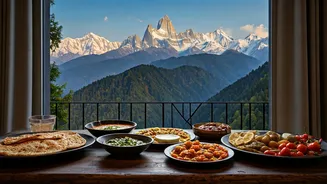
If Mussoorie’s charm lies in its colonial history and rolling foothills, Pelling, in the far-eastern state of Sikkim, offers a more dramatic and spiritual brand of mountain majesty. The town itself is modest, but its location is breathtaking, offering jaw-dropping, uninterrupted views of Mount Kanchenjunga, the third-highest peak in the world. Pelling serves as a base for exploring some of Sikkim’s most significant cultural sites, including the ancient Pemayangtse and Sangachoeling monasteries. For a modern thrill, the Pelling Skywalk—a glass-bottomed bridge suspended high above the landscape—provides a dizzying perspective of the surrounding peaks and valleys. It swaps the colonial nostalgia of Mussoorie for a powerful dose of Tibetan Buddhist culture and raw, high-altitude grandeur.
For the Truly Adventurous: Munsiyari
For travelers whose main goal is trekking and remote exploration, Munsiyari in Uttarakhand is the ultimate upgrade. Often called the “Gateway to the Johar Valley,” this small town sits at the foot of the massive Panchachuli peaks and serves as the starting point for some of India’s most legendary high-altitude treks, including the Milam Glacier and Nanda Devi Base Camp trails. The vibe here is rugged and unpolished. There are no fancy cafes or souvenir shops; there is only the raw, untamed beauty of the greater Himalayas. Munsiyari is for the serious adventurer who finds solace in challenging hikes, vast alpine meadows (bugyals), and the humbling scale of the mountains. It’s a place that demands effort but rewards it with unparalleled solitude and adventure.
For a Different World: Spiti Valley
While not a direct alternative to Manali or Mussoorie’s lush greenery, Spiti Valley is where many travelers graduate. Accessible via a breathtakingly treacherous road from Manali, Spiti is a cold desert mountain valley that feels more like Tibet than India. It’s a land of stark, lunar landscapes, ancient monasteries perched on cliffs (like Key Monastery and Dhankar Gompa), and tiny villages that are among the highest inhabited places on earth. A trip to Spiti isn’t a relaxing vacation; it’s an expedition. It requires acclimatization to high altitudes and a willingness to embrace basic amenities. But for those who make the journey, the reward is a profound sense of isolation, spirituality, and connection to a culture that has thrived in one of the world’s harshest environments.