





The Drainage Myth We All Believed
For generations, the common wisdom for ensuring good drainage in a pot was to add a layer of gravel, broken pottery shards, or pebbles at the bottom. It seems logical, right? The idea is that this coarse layer creates space for excess water to collect,
keeping it away from the plant’s roots. Unfortunately, this is one of gardening’s most persistent and counterproductive myths. Instead of improving drainage, adding a layer of gravel actually makes it worse. This practice raises the level where the soil naturally stays saturated, pushing that soggy zone closer to your plant’s delicate root system. It effectively reduces the total volume of usable, healthy soil available to the plant. The water doesn't easily move from the fine-textured soil into the coarse gravel layer below; it hangs out in the soil just above it, creating the exact swampy conditions you were trying to avoid.
Meet the Real Villain: The 'Perched Water Table'
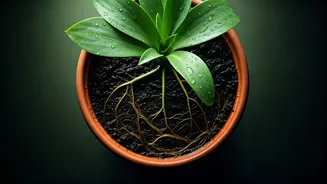
To understand why the gravel trick fails and the tilting hack works, you have to meet the real culprit: the perched water table. It’s a term from soil physics, but the concept is simple. In any container, no matter how many drainage holes it has, the soil at the very bottom will remain fully saturated with water after a thorough watering. This saturated layer is held in place by the cohesive and adhesive forces of water molecules—a phenomenon known as capillary action. Think of a kitchen sponge. If you soak it and hold it up, water will drain out, but the bottom of the sponge will stay saturated. You can’t get that last bit of water out unless you squeeze it. In a pot, the soil acts just like that sponge. This saturated zone, or perched water table, will always exist at the bottom. The problem is, its height is constant for any given soil type. In a shallow pot, that saturated zone can take up a significant portion of the container, leaving little aerated soil for roots to breathe.
Why Tilting Is a Game-Changer
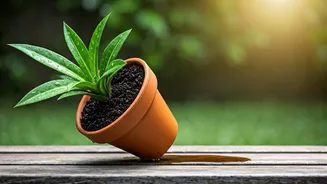
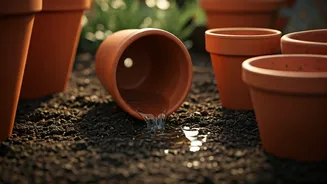
This is where the simple genius of tilting your pot comes in. By propping up one side of your container, you change the geometry of the pot relative to the force of gravity. The perched water table, which always wants to be level, is now positioned at an angle inside the container. This simple shift has a dramatic effect. The lowest point of the pot—the edge of the drainage hole on the downward side—is now effectively 'deeper' than much of the pot's bottom. This allows gravity to overcome the soil's capillary action and pull more water out. Tilting doesn't eliminate the perched water table, but it dramatically reduces its volume, freeing up a significant amount of soil from saturation. It's like tipping that kitchen sponge to let one corner drain more completely. The result is a healthier root zone with better aeration, all without buying a single product.
Putting the Tilt into Practice
Implementing this hack couldn't be easier. All you need is a small, sturdy object to use as a prop. A small rock, a brick, a piece of scrap wood, or a purpose-made 'pot foot' will do the trick. Simply slide it under one edge of your container. You don’t need a dramatic angle; a tilt of just 10 to 15 degrees is often enough to make a significant difference. This technique is most useful in a few key scenarios. It's fantastic for plants that are particularly sensitive to 'wet feet,' like succulents, lavender, or rosemary. It’s also a lifesaver for pots that have been caught in a heavy downpour and are completely saturated. Propping them up for a day or two will help them dry out much faster. For long-term use, just ensure your pot is stable and won't be easily knocked over, especially if you have pets or kids. For a cleaner look, you can use three or four smaller 'pot feet' to elevate the entire container, which achieves the same goal by improving airflow and drainage from all holes at once.