





An Urban Answer to Intense Storms
While the term “monsoon” might evoke the dramatic seasonal rains of South Asia, U.S. cities are grappling with their own version of extreme precipitation: intense, flash-flood-inducing summer thunderstorms. For decades, the default solution was concrete
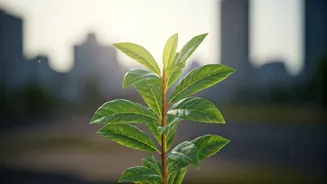
and steel—bigger drains and wider pipes. But a greener, more elegant strategy is gaining ground. Urban planners and environmental groups are increasingly looking to the humble tree as a powerful piece of living infrastructure. From New York’s Million Trees initiative to Chicago’s Our Roots program, cities are investing heavily in their urban canopies. These are not merely beautification projects. Each sapling planted today is a down payment on future climate resilience. As they mature, these trees will form a network of natural sponges, intercepting rainfall, slowing runoff, and easing the burden on overwhelmed sewer systems.
How Trees Drink the Rain
The science behind this strategy is straightforward but profound. First, a tree's leafy canopy acts as a massive umbrella, capturing a significant portion of rainfall before it ever hits the ground. A single mature oak can intercept thousands of gallons of water in a year. This captured water either evaporates back into the atmosphere—a process that has a cooling effect—or drips slowly to the ground, reducing the sudden, destructive surge of a downpour. What water does reach the ground encounters the second part of the system: the roots. A tree’s root network creates channels and pores in the soil, dramatically increasing its permeability. Instead of sheeting across pavement and into storm drains, rainwater soaks into the earth, where it is filtered naturally and recharges groundwater. This turns every tree pit into a miniature, self-regulating drainage basin, multiplying their effect across an entire neighborhood.
Fighting the Urban Heat Island
Beyond managing storms, these new saplings are also our best weapon against another modern urban affliction: the heat island effect. Cities, with their dark asphalt roads and heat-absorbing rooftops, can be 5 to 10 degrees Fahrenheit warmer than surrounding rural areas. This isn't just uncomfortable; it's dangerous, exacerbating air pollution and posing a serious health risk during heatwaves. Trees fight this in two ways. The most obvious is shade. A leafy canopy can reduce surface temperatures of asphalt and concrete by as much as 45°F. But they also act as natural air conditioners through evapotranspiration. As trees draw water up from their roots and release it as vapor from their leaves, they actively cool the surrounding air. A young, healthy tree can have the cooling effect of ten room-size air conditioners running 20 hours a day, according to the U.S. Department of Agriculture.
Smarter Planting for a Lasting Canopy
Simply putting trees in the ground isn’t enough. The success of these initiatives hinges on smart planning and long-term care. Saplings are fragile. They require watering, protection from pests and damage, and years of maintenance to reach maturity. Cities are learning that community involvement is key, with “tree keeper” and stewardship programs empowering residents to care for the saplings on their block. Furthermore, equity is a critical concern. Studies have consistently shown that lower-income neighborhoods and communities of color have less tree cover, leaving them more vulnerable to both flooding and extreme heat. Modern tree-planting programs are increasingly focused on “green equity,” prioritizing these underserved areas to ensure the benefits of a robust urban forest are shared by all residents. Choosing the right tree for the right place—native species that are drought-tolerant and suited for the urban environment—is also crucial for long-term survival and ecological health.