




The Land Between Worlds
Spiti Valley is not a place you stumble upon. Tucked away in the northeastern corner of the Indian state of Himachal Pradesh, it’s a cold desert mountain valley that lives up to its name, which translates to “The Middle Land”—a world suspended between
India and Tibet. For centuries, its extreme remoteness and harsh climate kept it isolated. Winters bring heavy snow that cuts off road access for months, and even in summer, reaching it requires a multi-day journey over some of the world's most treacherous roads. This isolation has preserved a unique Tibetan Buddhist culture and a landscape so raw and vast it feels almost prehistoric. It’s precisely this inaccessibility that has become its main draw for a certain type of traveler: the one who believes the greatest rewards lie at the end of the toughest roads.
Forged by Rivers, Not Planners
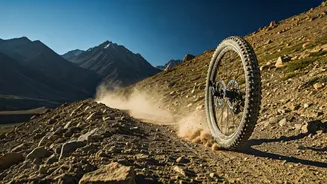
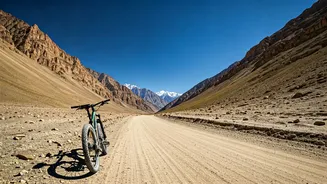
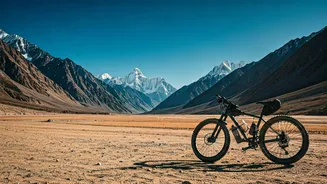
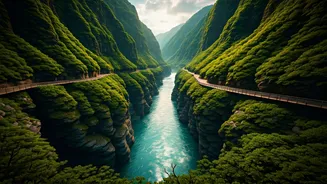
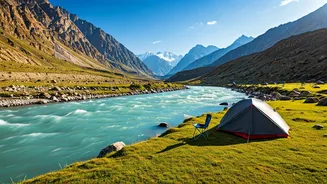
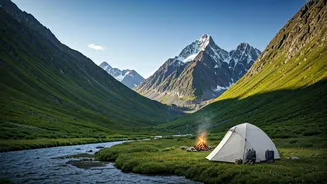
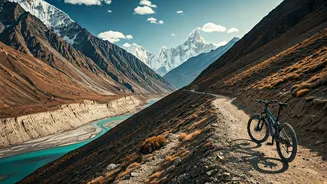
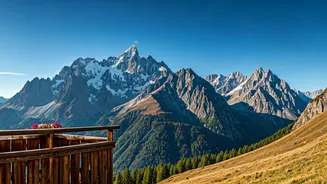
The mountain bike trails here aren’t manicured single-tracks built for tourists. They are the ancient footpaths, shepherd routes, and rugged jeep tracks that connect tiny, whitewashed villages and cliff-hanging monasteries. Many of these paths snake alongside the turquoise Spiti River and its tributaries, Pin and Parechu. This is what sets a Spiti bike journey apart. You aren't just riding through nature; you're following the lifelines of the valley. One moment you’re grinding up a steep pass, lungs burning in the thin air above 13,000 feet; the next, you’re rattling down a gravel path into a green oasis of barley fields, the river a constant, powerful presence beside you. The journey is a rhythmic cycle of brutal climbs and exhilarating descents, all set against a backdrop of barren, multi-hued mountains and a piercingly blue sky.
The Price of Admission
This is not a casual cycling holiday. The “thrill-seeking” element is very real and comes in many forms. The primary challenge is the altitude, with most of the valley floor sitting above 10,000 feet. Acclimatization isn't a suggestion; it's a requirement for survival. Riders must contend with the constant risk of altitude sickness, which can be debilitating. Then there's the terrain itself: a punishing mix of loose gravel, sandy patches, rocky sections, and the occasional river crossing where you’ll be carrying your bike on your shoulder. Add unpredictable weather that can swing from scorching sun to freezing winds in minutes, and the utter lack of modern conveniences. There are no bike shops for a quick repair, and cell service is a distant memory. This is a test of self-reliance, physical endurance, and mental fortitude.
More Than a Physical Journey
So why endure it? Because the reward is a profound sense of connection and accomplishment that few other trips can offer. The physical challenge peels away the noise of modern life, leaving you with the simple, focused task of pedaling forward. The real magic, however, lies in the moments between the hardships. It's cresting a pass to see the iconic Key Monastery, a thousand-year-old citadel of Tibetan Buddhism, appearing like a mirage. It's sharing a cup of salty butter tea with a family in a village that has seen few outsiders. It’s the humbling feeling of being a tiny speck in a colossal landscape under a canopy of stars so bright they feel close enough to touch. Backpackers are choosing Spiti not just to test their limits, but to find a place that feels untouched by time, where the journey itself—not just the destination—is the entire point.