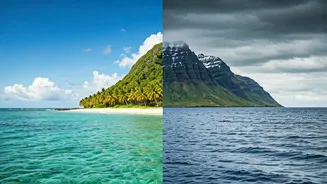







A World Apart, Hiding in Plain Sight
For most Americans, India conjures images of the Taj Mahal, the deserts of Rajasthan, or the chaotic energy of Mumbai. But tucked away in the country's far northeastern corner, connected to the rest of India by a slender 13-mile-wide corridor, lies a region
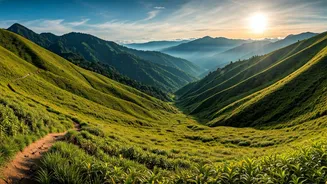
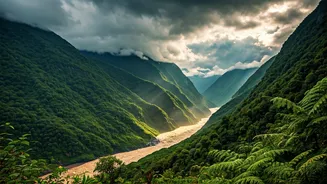
that feels like another world entirely. Comprising eight states, often called the “Seven Sisters” plus Sikkim, Northeast India is a mosaic of cultures, languages, and landscapes. It’s a place of Himalayan peaks, lush river valleys fed by the mighty Brahmaputra, and some of the last true rainforests in Asia. Here you can find the living root bridges of Meghalaya, grown by hand over generations, and the one-horned rhinos of Assam’s Kaziranga National Park. This staggering natural beauty is matched by its cultural diversity, with hundreds of distinct ethnic groups, each with its own traditions, dialects, and styles.
The Beauty in the Weave
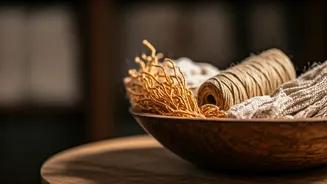
The region’s soul is perhaps best understood through its vibrant artistic traditions. In Nagaland, the annual Hornbill Festival is a dazzling spectacle of warrior dances, intricate beadwork, and monumental headdresses. In Manipur, the classical Manipuri dance is a graceful, spiritual art form, while the state’s textiles, particularly the richly patterned ‘phanek’ worn by women, tell stories of their community. Across the Northeast, weaving is not just a craft but a core part of female identity and economic independence. The patterns and colors of a shawl can signify tribe, status, and village. This deep-rooted creative spirit is the undeniable ‘beauty’ the region serves up, a living link to an ancient heritage that has more in common with Southeast Asia and Tibet than it does with Delhi.
The Friction of Disruption
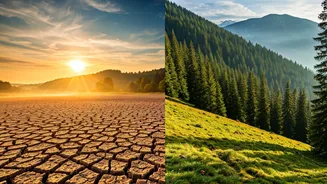
But this beauty is set against a backdrop of profound ‘disruption.’ For decades, the region was largely isolated, a place of insurgency, strict travel permits, and a general feeling of being forgotten by the Indian ‘mainland.’ Today, that isolation is shattering, and the change is turbulent. Massive infrastructure projects—dams, highways, and railways—are being built to better connect the region, but they often come at a huge environmental cost and displace indigenous communities. The influx of tourism, while economically beneficial, puts pressure on fragile ecosystems and local cultures. At the same time, long-simmering ethnic and political tensions persist, sometimes exploding into violent conflict, as seen tragically in recent events in Manipur. This disruption is the clash of the old and the new, the push for development against the pull of tradition, and the struggle for identity in a rapidly changing world.
A New Generation's Response
Out of this friction, a new and powerful energy is emerging. The ‘disruption’ is also a creative catalyst. A generation of young Northeasterners, connected to the world via the internet but fiercely proud of their heritage, are forging a new identity. They are the ones ‘serving’ both beauty and disruption. Fashion designers are taking traditional textiles and turning them into modern, global-facing apparel. Chefs are reimagining local ingredients and opening restaurants that challenge stereotypes of Indian food. And, famously, the region has become a hotbed for music. Shillong, the capital of Meghalaya, is widely known as the rock music capital of India, with a thriving indie scene that channels the angst, ambition, and energy of its youth. This creative boom is a response to the challenges they face—a way of defining themselves on their own terms.