





Beyond the Gimmicks
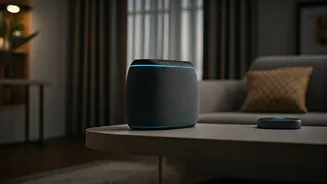
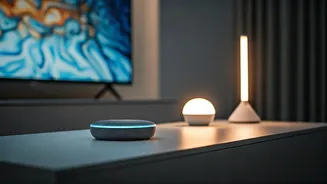
For years, the “smart home” has been a clunky collection of disconnected gadgets. You have one app for your lights, another for your security camera, and a third for your thermostat. Your smart speaker can follow a direct order—'play Taylor Swift' or 'set
a timer for 10 minutes'—but it has no real understanding of context. It doesn’t know if you’re cooking, relaxing after a long day, or getting ready to leave. This is the core limitation of today's smart home: it’s reactive, not proactive. It’s a set of remote controls, not an intelligent system. But the underlying technologies are finally maturing, paving the way for a home that doesn't just respond, but understands and acts on your behalf.
The Brain and The Nervous System
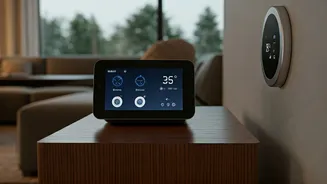
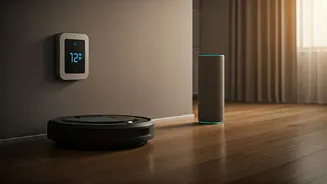
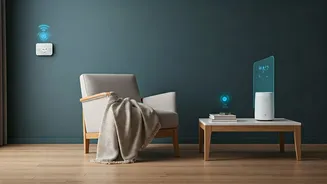
To understand the coming shift, you need to know the two key players: the Internet of Things (IoT) and Artificial Intelligence (AI). Think of IoT as the home’s nervous system. It’s the vast network of sensors and connected devices—the smart lock on your door, the motion sensor in the hallway, the moisture detector under the sink, the smart mattress tracking your sleep. These devices are the digital eyes, ears, and nerve endings of your house, constantly gathering data about the environment.
By itself, that data is just noise. That’s where AI comes in. AI is the home’s brain. It takes the torrent of information from the IoT nervous system and makes sense of it. It learns your patterns, understands context, and makes decisions. The AI is what connects the fact that your car just pulled into the driveway (GPS data), the sun has set (light sensor), and it's a cold Tuesday (weather data and your calendar) to decide it should turn on the entryway lights, raise the heat, and start playing your 'After Work' playlist.
A Day in the Life of a 2026 Home
So what does this actually look like? Forget barking commands at a plastic cylinder. In an AI-powered home, your morning routine begins when your smart mattress signals to the house that you’re entering a lighter stage of sleep. The blinds slowly open to let in natural light, the coffee maker starts brewing, and the bathroom floor gently warms up. As you leave for work, the house knows you're gone. It automatically locks the doors, arms the security system, lowers the thermostat to an energy-saving temperature, and turns off any lights you forgot.
Later, it detects an unusual pressure drop in a water pipe and sends an alert to your phone, warning you of a potential leak before it causes major damage. When you’re heading home, the house prepares for your arrival. It doesn’t just do what you told it to; it does what it has learned you prefer. This is ambient computing: the technology fades into the background, working for you without constant intervention. The goal is a home that functions less like a machine you operate and more like a helpful partner that manages the mundane details of life.
Why Now? The Interoperability Breakthrough
This vision has been promised for decades, but it's finally becoming plausible for one main reason: interoperability. For years, a Google Nest wouldn’t talk to an Amazon Ring, which wouldn’t talk to an Apple HomePod. This created walled gardens where devices couldn’t collaborate. The game-changer is Matter, a universal connectivity standard backed by all the major tech giants. Matter acts as a common language, allowing devices from different brands to communicate seamlessly and securely. This is the critical glue that allows the AI “brain” to receive signals from and send commands to the entire IoT “nervous system,” regardless of who made the lightbulb or the door lock. With this barrier falling, developers and manufacturers can focus on building sophisticated AI experiences on top of a reliable foundation.
The Frontier Has Its Dangers
Of course, this hyper-connected frontier isn’t without its challenges. The most obvious concern is privacy. A home that knows your every move, habit, and preference is also a home that holds an unprecedented amount of personal data. Where is this data stored? Who has access to it? Ensuring that personal information is kept secure and private will be the single most important challenge for companies in this space. Consumers will need to be vigilant about the permissions they grant and the brands they trust. Furthermore, the cost and complexity of upgrading to a fully integrated system will be significant, creating a divide between those who can afford this new frontier and those who cannot. The truly intelligent home won't arrive overnight, and it will require us to navigate serious questions about security and equity.