



The Unseen Underground War
The marigold’s greatest power isn’t visible above ground. Its secret weapon lies in the roots, where it wages a chemical war against one of gardening’s most destructive microscopic villains: root-knot nematodes. These tiny worms invade the roots of susceptible
plants—like tomatoes, peppers, and squash—causing galls or “knots” that block the flow of water and nutrients, leading to stunted, sickly plants. Certain types of marigolds, particularly French marigolds (*Tagetes patula*), release a potent biocidal compound called thiophene into the soil. This natural nematicide is toxic to root-knot nematodes, effectively disinfecting the soil where the marigolds grow. For this to work best, it’s not a one-and-done solution. Gardeners often plant a dense cover crop of marigolds in a problem area for a full season to significantly reduce nematode populations for the following year’s planting.
A Pungent Perfume Pests Hate
While nematodes are the main target, marigolds also deter a host of pests above ground, and it’s all thanks to their famously pungent scent. That sharp, earthy smell that some people love and others find a bit overwhelming is a powerful deterrent for many unwanted insects. The scent comes from volatile organic compounds, including limonene—the same chemical found in citrus peels. This aromatic shield is particularly effective against whiteflies, a common greenhouse and garden pest that can wreak havoc on tomatoes and other vegetables. The strong smell appears to confuse them, making it harder for them to locate their preferred host plants. Some gardeners also report success in warding off Mexican bean beetles and even squash bugs when marigolds are planted nearby. The scent essentially acts as camouflage, masking the appealing aromas of your prized vegetables.
So, What About the Color?
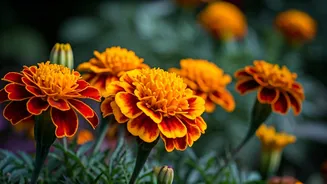
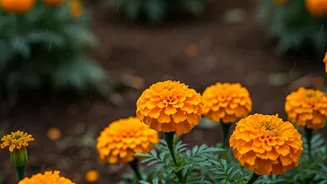
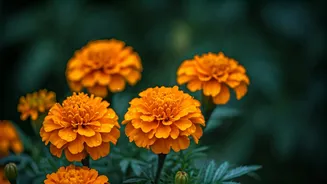
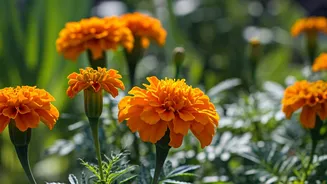
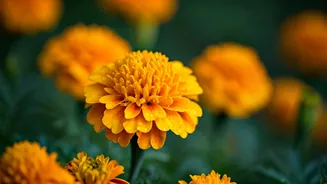
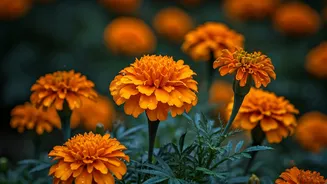
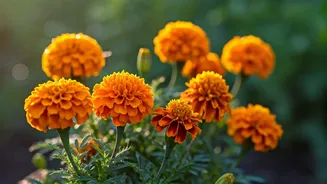
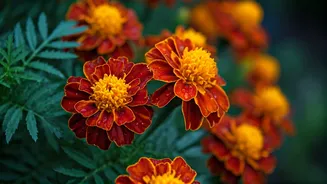
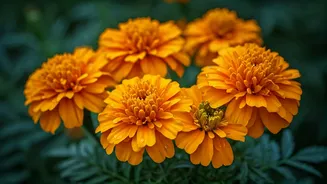
The headline zeros in on color, and while it’s not the primary weapon, it plays a fascinating supporting role. The brilliant yellows, oranges, and reds of marigold blooms are more than just pretty. For one, these vibrant colors are highly attractive to beneficial insects. Pollinators like bees and butterflies are drawn to them, but so are predatory insects like hoverflies and ladybugs, whose larvae feast on aphids and other soft-bodied pests. In this way, marigolds act as a beacon for your garden’s natural security team. Furthermore, some entomologists suggest that the bright flowers can act as a “trap crop” for certain pests like thrips, luring them to the marigolds and away from more valuable plants. The flash of color can also visually confuse pests that are programmed to seek out the green silhouette of a vegetable plant, causing them to fly right on by.
Putting Marigolds to Work
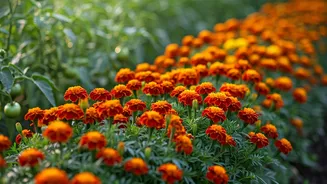
Ready to deploy these floral protectors? Success lies in smart placement and choosing the right varieties. For nematode control, French marigolds are scientifically proven to be the most effective. Plant them densely throughout your vegetable beds, interspersing them between tomato, pepper, and bean plants. A border of marigolds around the entire garden can create a perimeter defense against crawling pests and a fragrant barrier for flying ones. Don’t expect a magical, impenetrable force field. Marigolds are a tool—a very effective one—in an integrated pest management (IPM) strategy. They work best alongside other healthy garden practices like crop rotation, encouraging beneficial insects, and maintaining healthy soil. For an easy start, simply tuck a few French marigold plants into your vegetable containers or raised beds. You’ll add a splash of beautiful, enduring color while giving your plants a fighting chance against common pests.