






The New Definition of 'Higher Ground'
The phrase “higher ground” isn’t just a metaphor. For a growing wave of India’s youth, it represents a tangible escape. They are leaving behind ancestral villages and farming communities, not for mountains, but for the concrete jungles of Mumbai, Delhi,
Bengaluru, and Hyderabad. This internal migration is one of the most significant demographic shifts happening on the planet today. It’s a story about leaving behind a life of increasing precarity for one of perceived opportunity. This movement isn’t entirely new—people have moved to cities for work for generations—but the scale and the driving forces behind it have fundamentally changed. It’s no longer just about a better job; for many, it’s about finding a place where a viable future is still possible.
Pushed by a Harsher Climate
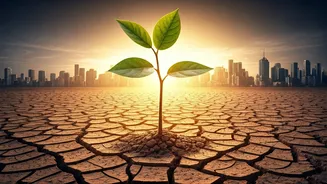
The primary “push” factor is an environment turning hostile. Large swaths of India are becoming increasingly difficult to live in. Record-breaking heatwaves, with temperatures soaring past 120°F, make agricultural labor dangerous and sometimes deadly. Monsoons, the lifeblood of Indian agriculture, are becoming erratic—arriving late, delivering too much rain in too little time, or failing altogether. This volatility devastates crop yields and decimates rural incomes. For a young person watching their family’s farm struggle against drought one year and floods the next, the promise of a stable, air-conditioned office job in a city becomes irresistible. The land that once promised sustenance now represents a cycle of debt and uncertainty. Climate change isn't an abstract threat; it’s a daily reality that is actively dismantling the rural economy and pushing its youngest and most ambitious members out.
Pulled by Urban Promise
While climate change provides the push, the “pull” of India’s booming cities is equally powerful. Urban centers are magnets of aspiration. They are home to the universities, the tech startups, the financial services firms, and the gig economy platforms that offer pathways to a middle-class life that farming often cannot. Armed with smartphones and internet access, rural youth are more aware than ever of the opportunities available elsewhere. They see the lives of cousins and friends in the city through social media and want a piece of it. For young women, in particular, the city can offer a degree of freedom and autonomy unimaginable in traditional village settings. This quest for education, a salaried job, and personal growth is reshaping what success looks like for an entire generation. The dream is no longer just to own land, but to earn a degree and secure a future in the globalized, digital economy.
A Nation Being Reshaped
This mass exodus from the countryside has profound consequences for India and, by extension, the world. India’s cities are already straining under the weight of their populations, with challenges in housing, water supply, and infrastructure. This new influx of climate and economic migrants will test their limits even further. At the same time, this shift is powering India's economic engine. The nation's future as a global power depends on harnessing the energy of this young, urbanizing workforce. For the United States and the rest of the world, this trend matters. It will influence everything from global supply chains and tech development to international climate policy and security. The future of the world’s largest democracy is being written in its crowded, chaotic, and opportunity-filled cities, by a generation that chose to seek higher ground when their homes could no longer support their dreams.